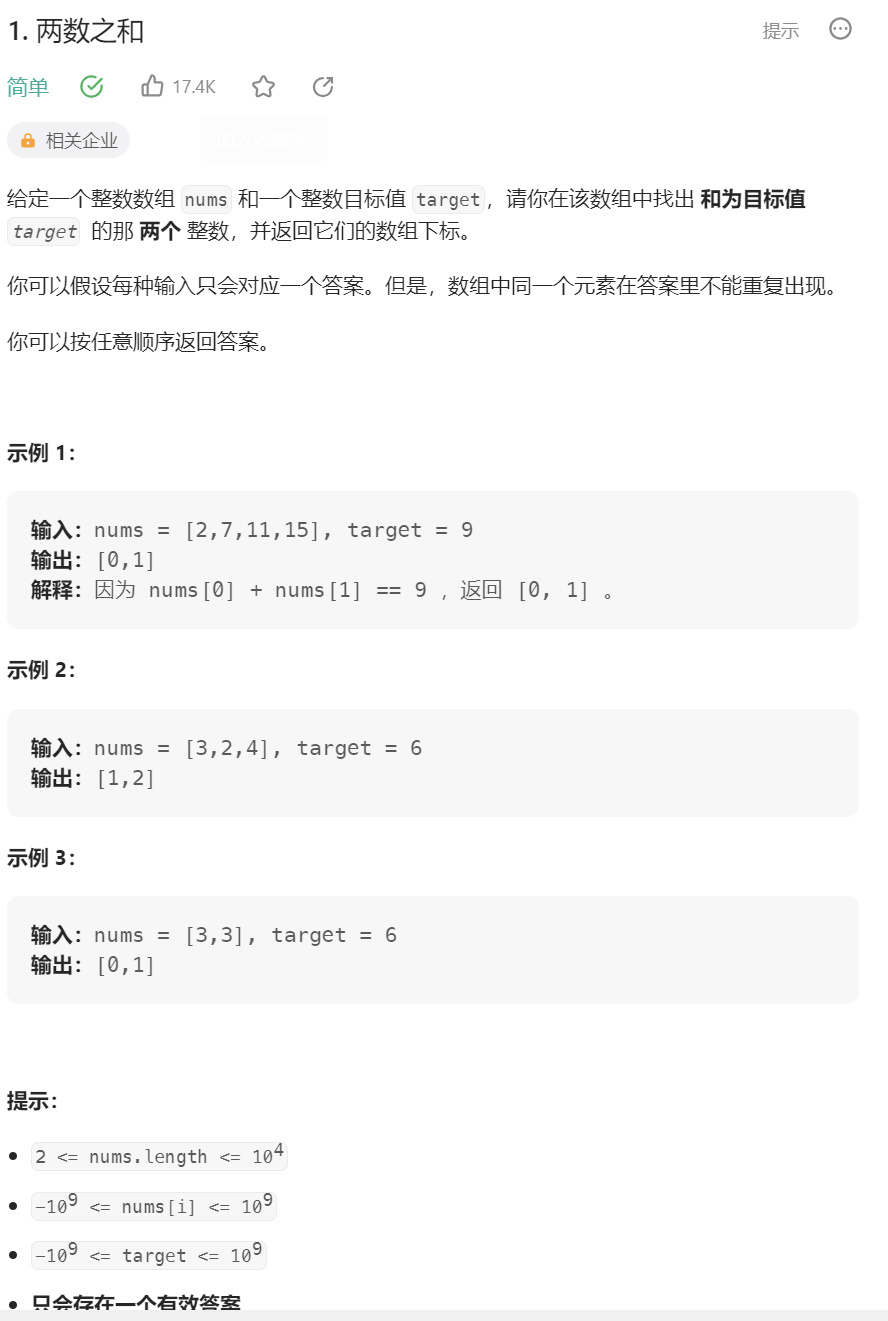
方法一:HashMap
1
2
3
4
5
6
7
8
9
10
11
| class Solution {
public int[] twoSum(int[] nums, int target) {
Map<Integer, Integer> map = new HashMap<>();
for (int i = 0; i < nums.length; ++i) {
if (map.containsKey(target - nums[i]))
return new int[]{map.get(target - nums[i]), i};
map.put(nums[i], i);
}
return new int[0];
}
}
|
方法一:链表
1
2
3
4
5
6
7
8
9
10
11
12
13
14
15
16
17
18
19
20
21
22
23
24
25
26
27
28
29
|
class Solution {
public ListNode addTwoNumbers(ListNode l1, ListNode l2) {
ListNode dummy = new ListNode(0), cur = dummy;
int carry = 0;
while (l1 != null || l2 != null) {
int val = (l1 != null ? l1.val : 0) + (l2 != null ? l2.val : 0) + carry;
carry = val >= 10 ? 1 : 0;
cur.next = new ListNode(carry == 0 ? val : val % 10);
cur = cur.next;
if (l1 != null)
l1 = l1.next;
if (l2 != null)
l2 = l2.next;
}
if (carry == 1)
cur.next = new ListNode(1);
return dummy.next;
}
}
|

方法一:滑动窗口
1
2
3
4
5
6
7
8
9
10
11
12
13
14
15
16
| class Solution {
public int lengthOfLongestSubstring(String s) {
int res = 0, n = s.length();
Map<Character, Integer> map = new HashMap<>();
for (int left = 0, right = 0; right < n; ++right) {
char ch = s.charAt(right);
while (map.containsKey(ch)) {
left = Math.max(left, map.get(ch) + 1);
map.remove(ch);
}
map.put(ch, right);
res = Math.max(res, right - left + 1);
}
return res;
}
}
|
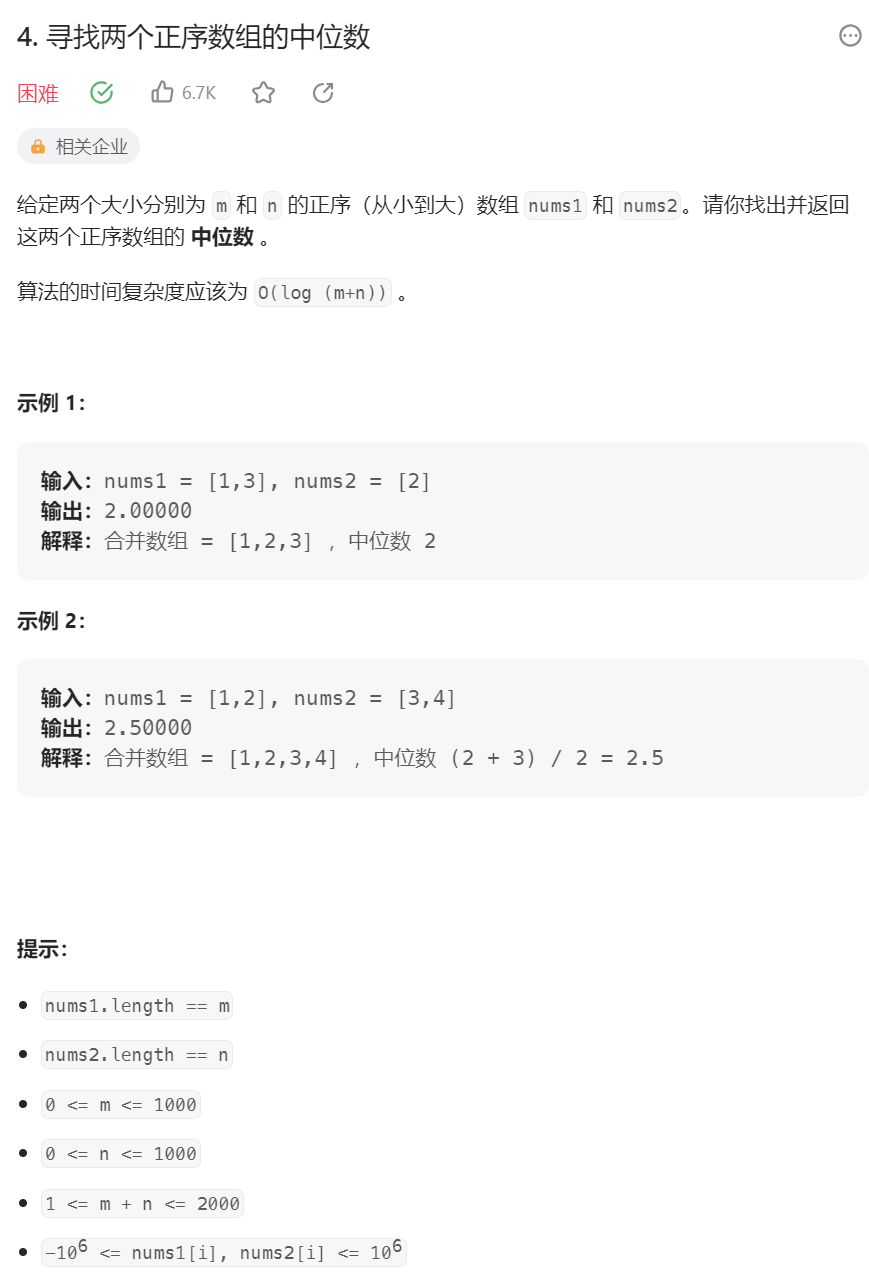
方法一:划分区间
1
2
3
4
5
6
7
8
9
10
11
12
13
14
15
16
17
18
19
20
21
22
23
24
25
26
27
28
29
30
| class Solution {
public double findMedianSortedArrays(int[] nums1, int[] nums2) {
if (nums1.length > nums2.length)
return findMedianSortedArrays(nums2, nums1);
int m = nums1.length, n = nums2.length;
int median1 = 0, median2 = 0;
int left = 0, right = m;
while (left <= right) {
int i = (left + right) / 2, j = (m + n + 1) / 2 - i;
int nums_i = i == m ? Integer.MAX_VALUE : nums1[i];
int nums_im1 = i == 0 ? Integer.MIN_VALUE : nums1[i - 1];
int nums_j = j == n ? Integer.MAX_VALUE : nums2[j];
int nums_jm1 = j == 0 ? Integer.MIN_VALUE : nums2[j - 1];
if (nums_im1 <= nums_j) {
median1 = Math.max(nums_im1, nums_jm1);
median2 = Math.min(nums_i, nums_j);
left = i + 1;
}
else {
right = i - 1;
}
}
return (m + n) % 2 == 0 ? (median1 + median2) / 2.0 : median1;
}
}
|
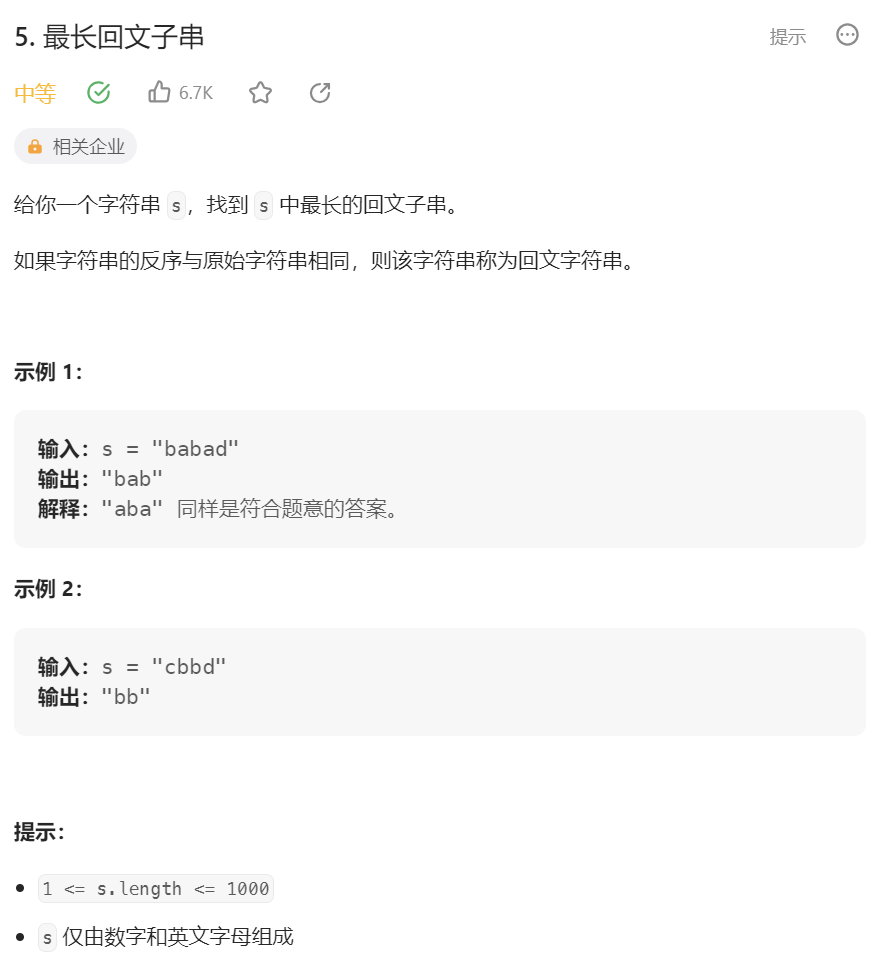
方法一:DP
注意遍历顺序
1
2
3
4
5
6
7
8
9
10
11
12
13
14
15
16
17
18
19
20
21
22
23
| class Solution {
public String longestPalindrome(String s) {
int n = s.length(), max = 0;
int[] maxIndex = new int[2];
int[][] dp = new int[n][n];
for (int i = n - 1; i >= 0; --i) {
char ch1 = s.charAt(i);
for (int j = i; j < n; ++j) {
char ch2 = s.charAt(j);
if (j - i + 1 <= 2)
dp[i][j] = ch1 == ch2 ? j - i + 1 : 0;
else
dp[i][j] = (ch1 == ch2 && dp[i + 1][j - 1] > 0) ? 2 + dp[i + 1][j - 1] : 0;
if (dp[i][j] > max) {
max = dp[i][j];
maxIndex[0] = i;
maxIndex[1] = j;
}
}
}
return s.substring(maxIndex[0], maxIndex[1] + 1);
}
}
|
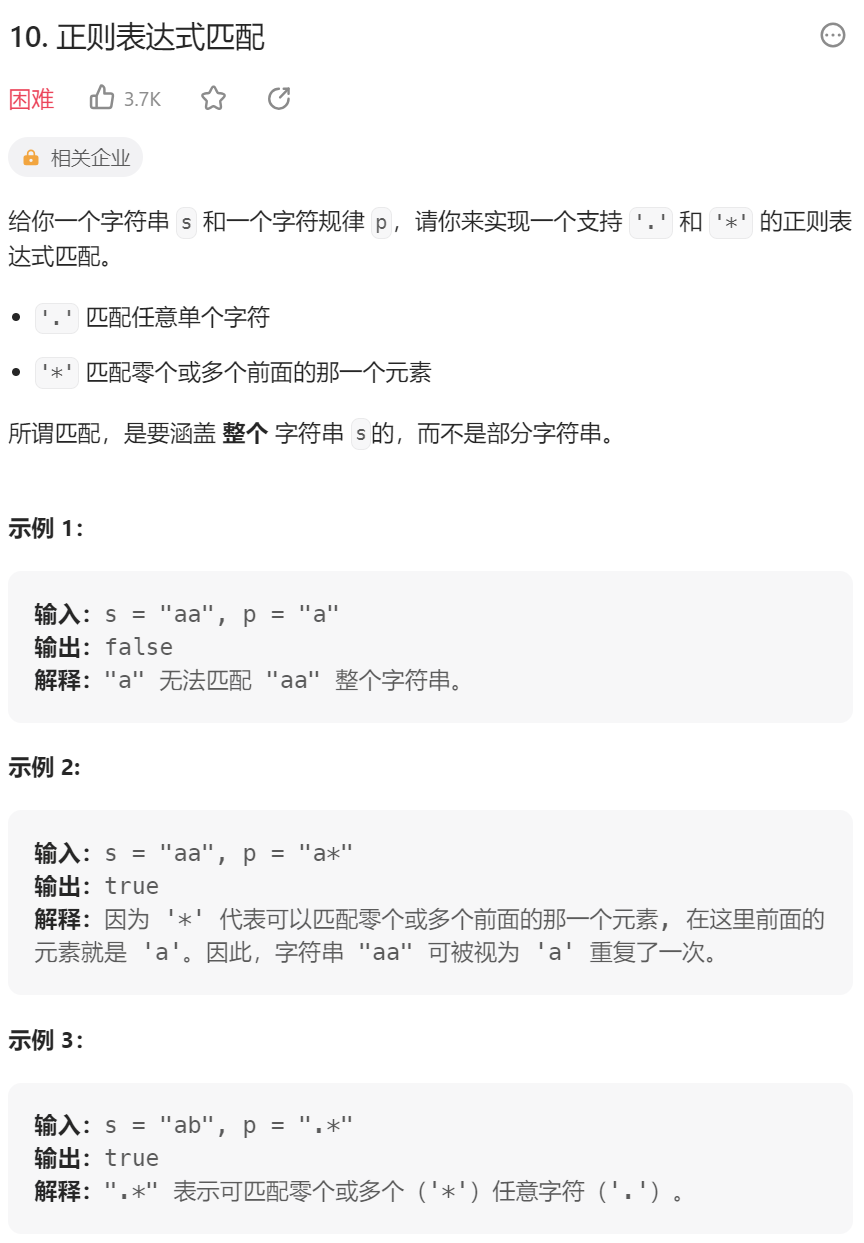
方法一:DP
题解
初始化非常重要!!!!
1
2
3
4
5
6
7
8
9
10
11
12
13
14
15
16
17
18
19
20
21
22
23
24
| class Solution {
public boolean isMatch(String s, String p) {
int m = s.length(), n = p.length();
boolean[][] dp = new boolean[m + 1][n + 1];
dp[0][0] = true;
for (int j = 1; j <= n; ++j)
if (p.charAt(j - 1) == '*')
dp[0][j] = dp[0][j - 2];
for (int i = 1; i <= m; ++i) {
for (int j = 1; j <= n; ++j) {
if (s.charAt(i - 1) == p.charAt(j - 1) || p.charAt(j - 1) == '.')
dp[i][j] = dp[i - 1][j - 1];
else if (p.charAt(j - 1) == '*') {
if (s.charAt(i - 1) == p.charAt(j - 2) || p.charAt(j - 2) == '.')
dp[i][j] = dp[i][j - 2] || dp[i - 1][j];
else
dp[i][j] = dp[i][j - 2];
}
}
}
return dp[m][n];
}
}
|
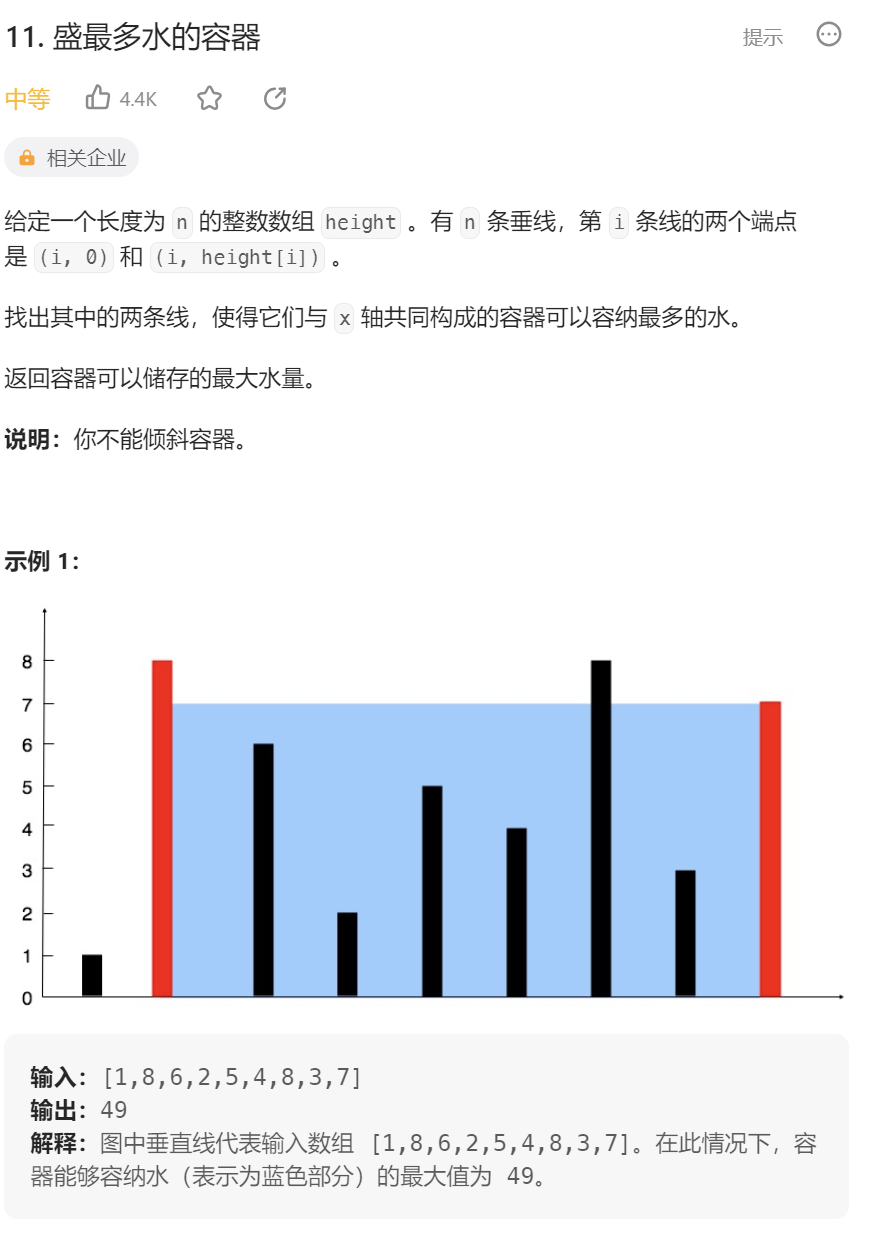
方法一:双指针贪心
移动短板,可以证明不会漏掉最大的结果
1
2
3
4
5
6
7
8
9
10
11
| class Solution {
public int maxArea(int[] height) {
int n = height.length, max = 0;
int left = 0, right = n - 1;
while (left < right) {
int length = right - left;
max = height[left] < height[right] ? Math.max(max, length * height[left++]) : Math.max(max, length * height[right--]);
}
return max;
}
}
|
方法二:回溯(超时)
1
2
3
4
5
6
7
8
9
10
11
12
13
14
15
16
17
18
19
20
21
| class Solution {
public int maxArea(int[] height) {
n = height.length;
this.height = height;
dfs(0, n - 1);
return res;
}
private void dfs(int left, int right) {
if (left == right) {
return;
}
res = Math.max(res, (right - left) * Math.min(height[right], height[left]));
dfs(left + 1, right);
dfs(left, right - 1);
}
int n, res = 0;
int[] height;
}
|
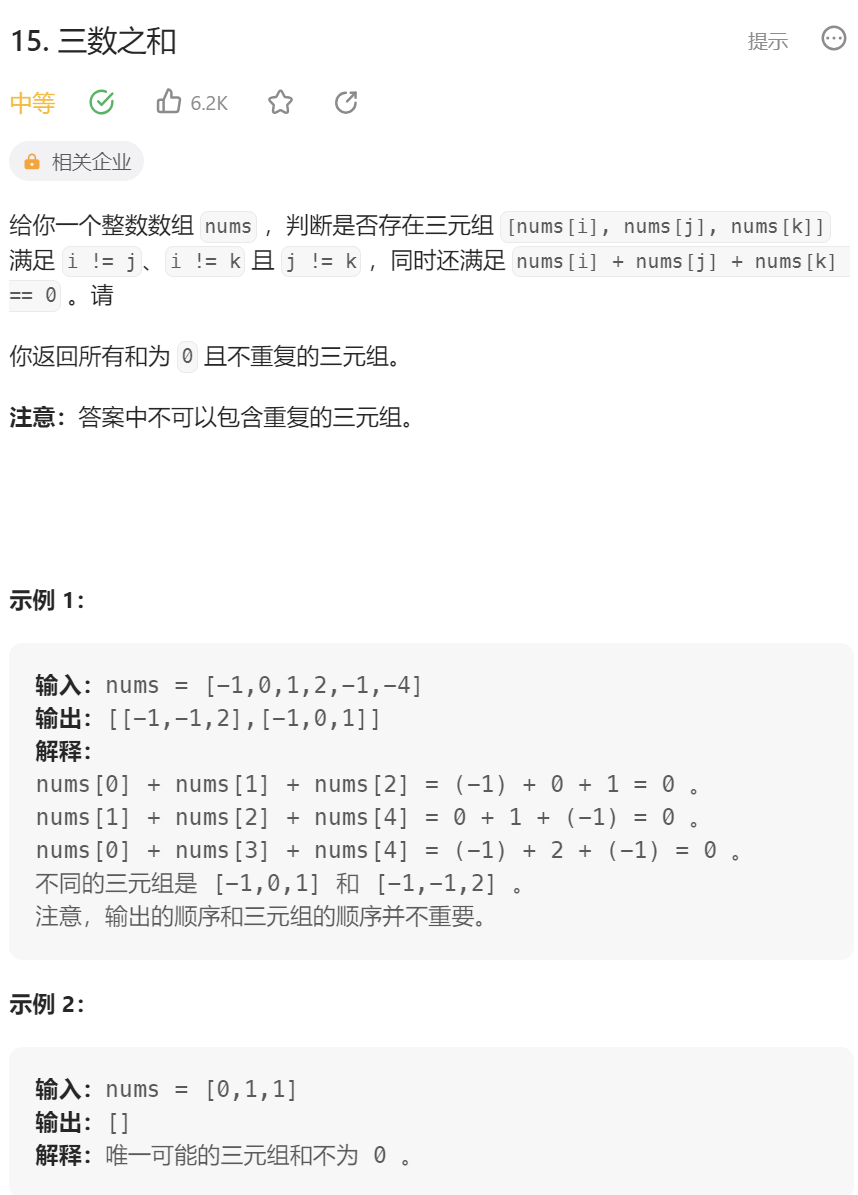
方法一:排序 + 双指针
1
2
3
4
5
6
7
8
9
10
11
12
13
14
15
16
17
18
19
20
21
22
23
24
25
26
27
28
29
30
| class Solution {
public List<List<Integer>> threeSum(int[] nums) {
List<List<Integer>> res = new LinkedList<>();
Arrays.sort(nums);
int n = nums.length;
for (int i = 0; i < n - 2; ++i) {
if (nums[i] > 0)
break;
if (i > 0 && nums[i] == nums[i - 1])
continue;
int left = i + 1, right = n - 1;
while (left < right) {
if (nums[i] + nums[left] + nums[right] == 0) {
res.add(Arrays.asList(nums[i], nums[left], nums[right]));
while (left < right && nums[left + 1] == nums[left])
++left;
while (left < right && nums[right - 1] == nums[right])
--right;
++left;
--right;
}
else if (nums[i] + nums[left] + nums[right] < 0)
++left;
else
--right;
}
}
return res;
}
}
|
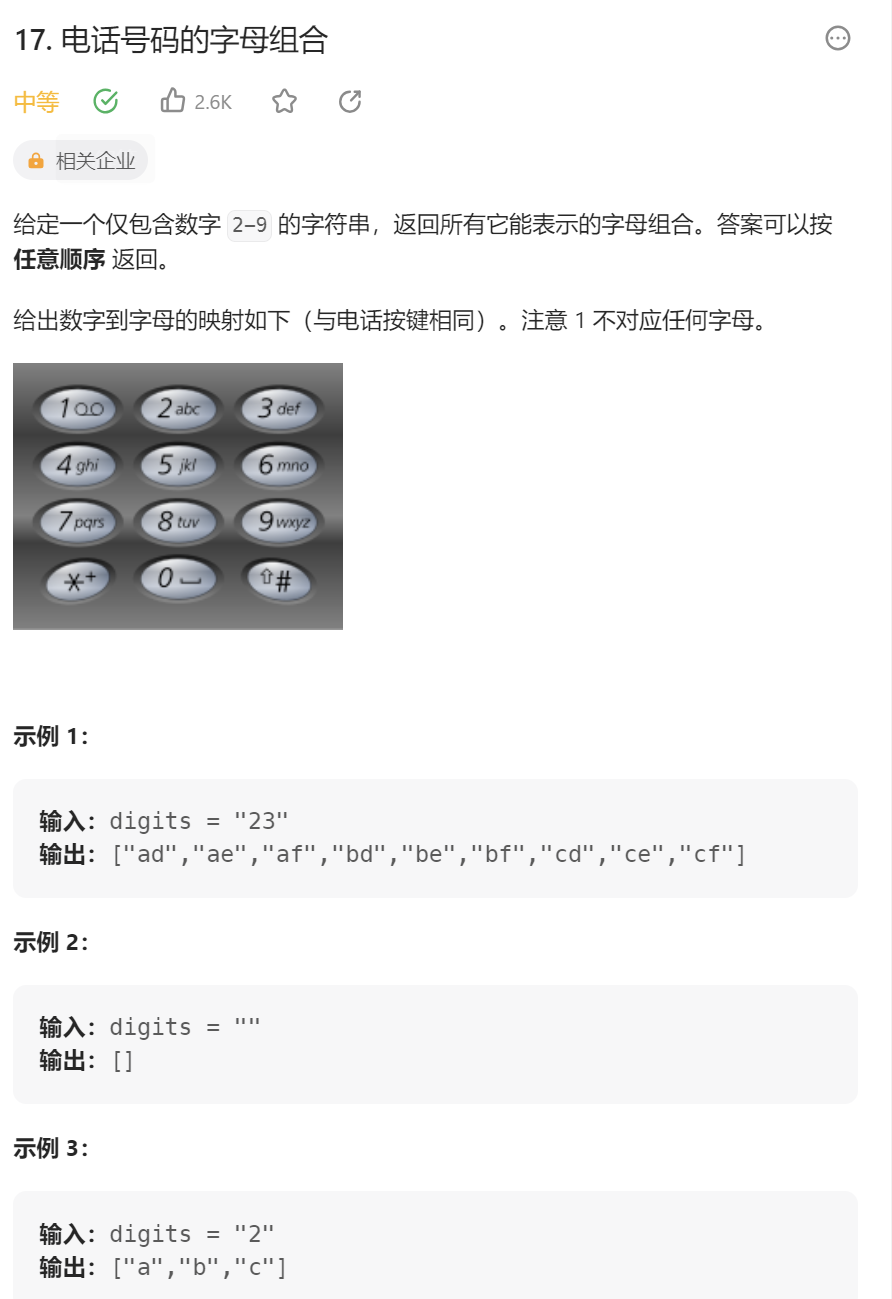
方法一:回溯
1
2
3
4
5
6
7
8
9
10
11
12
13
14
15
16
17
18
19
20
21
22
23
24
25
| class Solution {
public List<String> letterCombinations(String digits) {
dfs(digits, 0);
return res;
}
private void dfs(String digits, int index) {
if (index == digits.length()) {
if (sb.length() > 0)
res.add(new String(sb));
return;
}
int curDigit = digits.charAt(index) - '0';
String curStr = map[curDigit];
for (int i = 0; i < curStr.length(); ++i) {
sb.append(curStr.charAt(i));
dfs(digits, index + 1);
sb.deleteCharAt(sb.length() - 1);
}
}
String[] map = new String[]{"", "", "abc", "def", "ghi", "jkl", "mno", "pqrs", "tuv", "wxyz"};
List<String> res = new ArrayList<>();
StringBuilder sb = new StringBuilder();
}
|
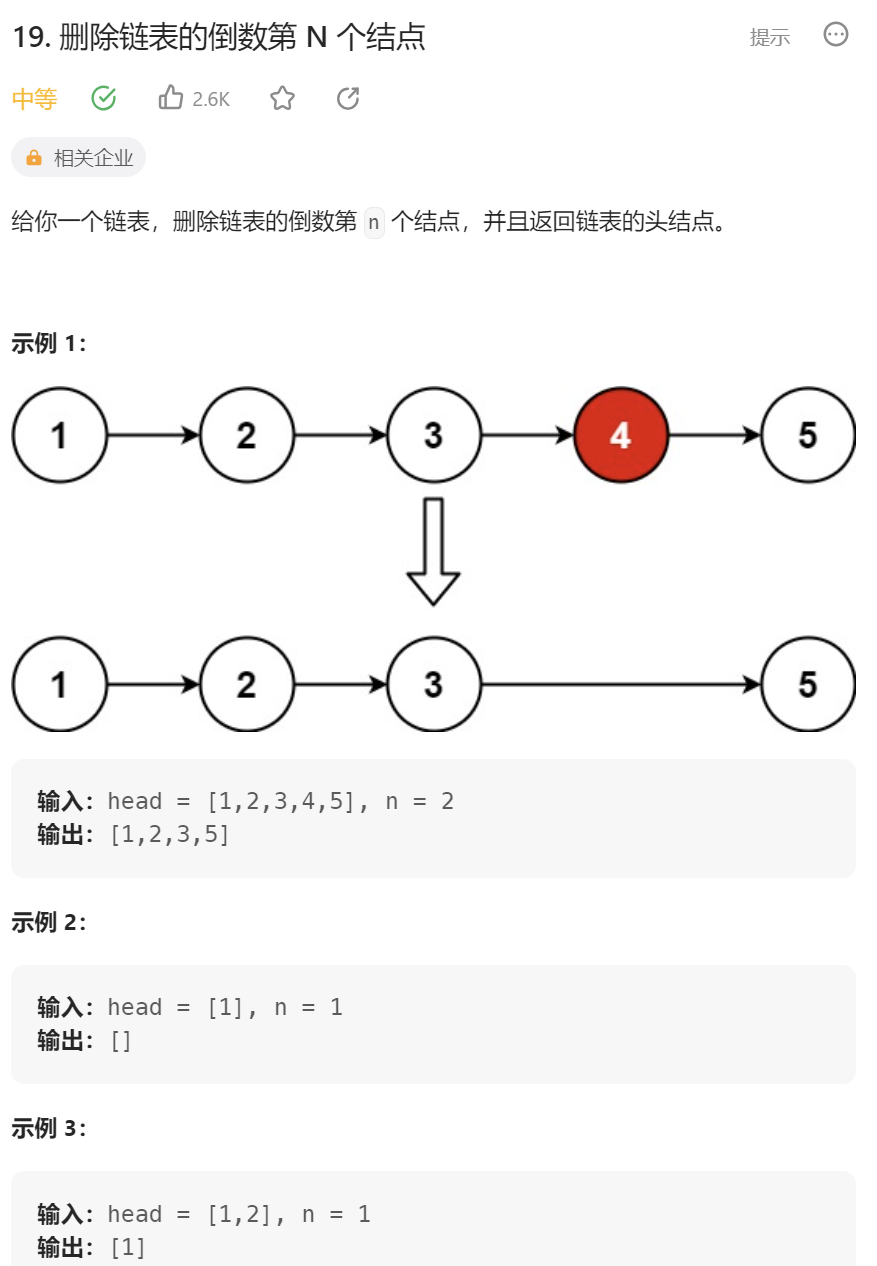
方法一:模拟
1
2
3
4
5
6
7
8
9
10
11
12
13
14
15
16
17
18
19
20
21
22
23
|
class Solution {
public ListNode removeNthFromEnd(ListNode head, int n) {
ListNode dummyHead = new ListNode(-1, head), cur = head, pre = dummyHead;
for (int i = 0; i < n; ++i)
cur = cur.next;
while (cur != null) {
cur = cur.next;
pre = pre.next;
}
pre.next = pre.next.next;
return dummyHead.next;
}
}
|
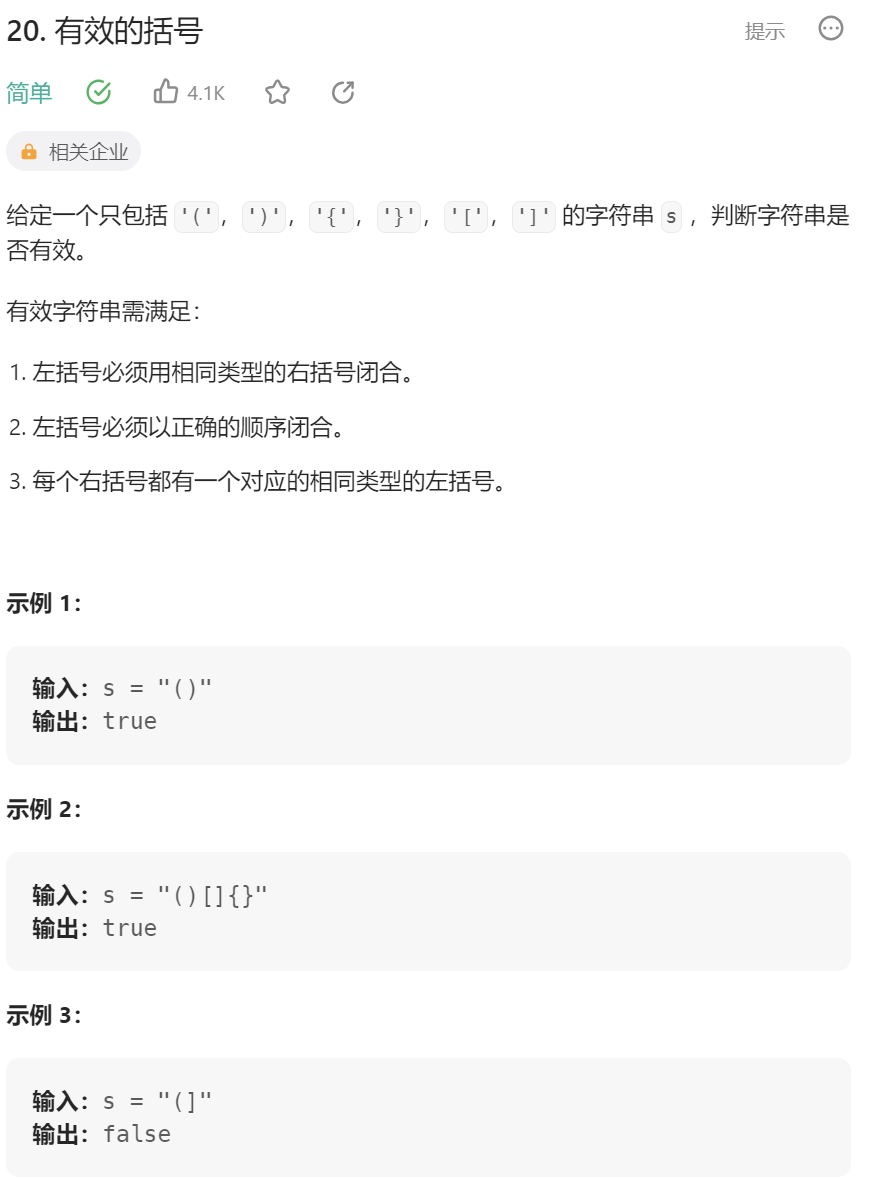
方法一:栈 + HashMap 模拟
1
2
3
4
5
6
7
8
9
10
11
12
13
14
15
16
17
18
19
20
21
| class Solution {
public boolean isValid(String s) {
Stack<Character> stack = new Stack<>();
Map<Character, Character> map = new HashMap<>();
map.put(')', '(');
map.put('}', '{');
map.put(']', '[');
for (int i = 0; i < s.length(); ++i) {
char ch = s.charAt(i);
if (ch == '(' || ch == '[' || ch == '{')
stack.push(ch);
else {
if (stack.isEmpty())
return false;
if (map.get(ch) != stack.pop())
return false;
}
}
return stack.isEmpty();
}
}
|
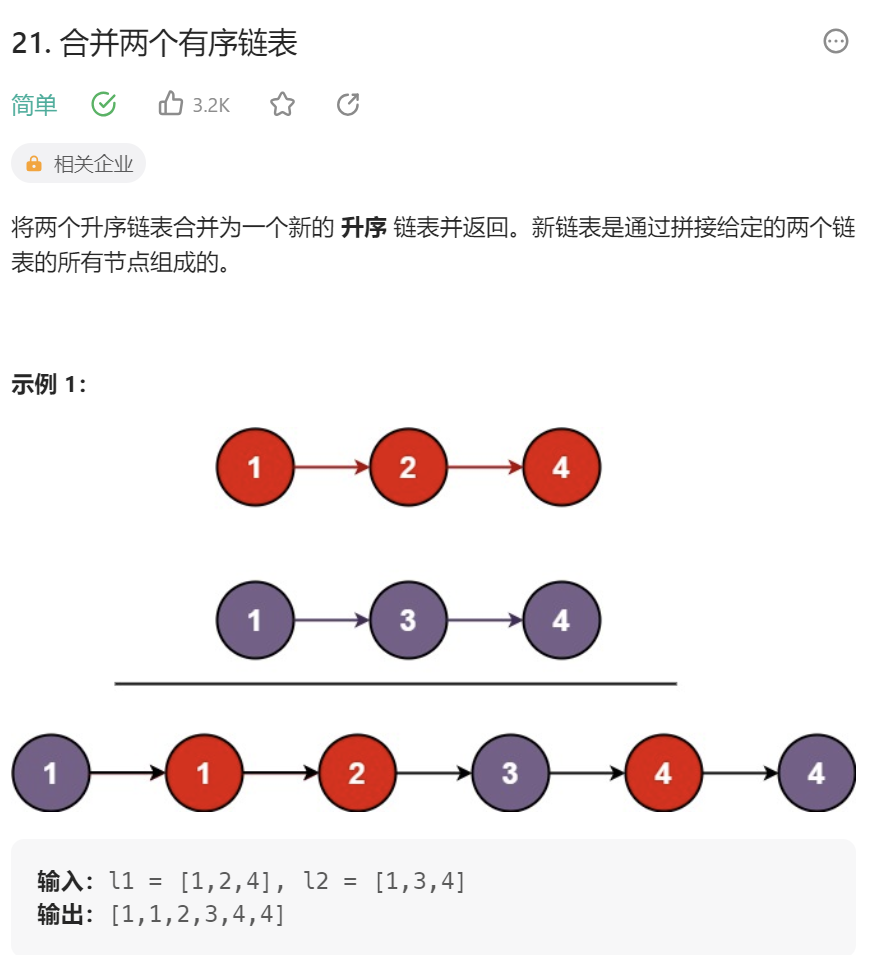
方法二:递归
题解
1
2
3
4
5
6
7
8
9
10
11
12
13
14
15
16
17
18
19
20
21
22
23
24
25
26
|
class Solution {
public ListNode mergeTwoLists(ListNode list1, ListNode list2) {
if (list1 == null)
return list2;
if (list2 == null)
return list1;
if (list1.val < list2.val) {
list1.next = mergeTwoLists(list1.next, list2);
return list1;
}
else {
list2.next = mergeTwoLists(list1, list2.next);
return list2;
}
}
}
|
方法三:迭代
1
2
3
4
5
6
7
8
9
10
11
12
13
14
15
16
17
18
19
20
21
22
23
24
25
26
27
28
29
30
|
class Solution {
public ListNode mergeTwoLists(ListNode l1, ListNode l2) {
if (l1 == null || l2 == null)
return l1 == null ? l2 : l1;
ListNode dummyHead = new ListNode(), cur = dummyHead;
while (l1 != null && l2 != null) {
if (l1.val < l2.val) {
cur.next = l1;
l1 = l1.next;
}
else {
cur.next = l2;
l2 = l2.next;
}
cur = cur.next;
}
cur.next = l1 == null ? l2 : l1;
return dummyHead.next;
}
}
|
方法一:模拟
1
2
3
4
5
6
7
8
9
10
11
12
13
14
15
16
17
18
19
20
21
22
23
24
25
26
27
28
29
30
31
32
33
34
35
|
class Solution {
public ListNode mergeTwoLists(ListNode list1, ListNode list2) {
if (list1 == null)
return list2;
if (list2 == null)
return list1;
ListNode dummyHead = new ListNode(-1), cur = dummyHead;
while (list1 != null && list2 != null) {
if (list1.val < list2.val) {
cur.next = new ListNode(list1.val);
list1 = list1.next;
}
else {
cur.next = new ListNode(list2.val);
list2 = list2.next;
}
cur = cur.next;
}
if (list1 == null)
cur.next = list2;
if (list2 == null)
cur.next = list1;
return dummyHead.next;
}
}
|
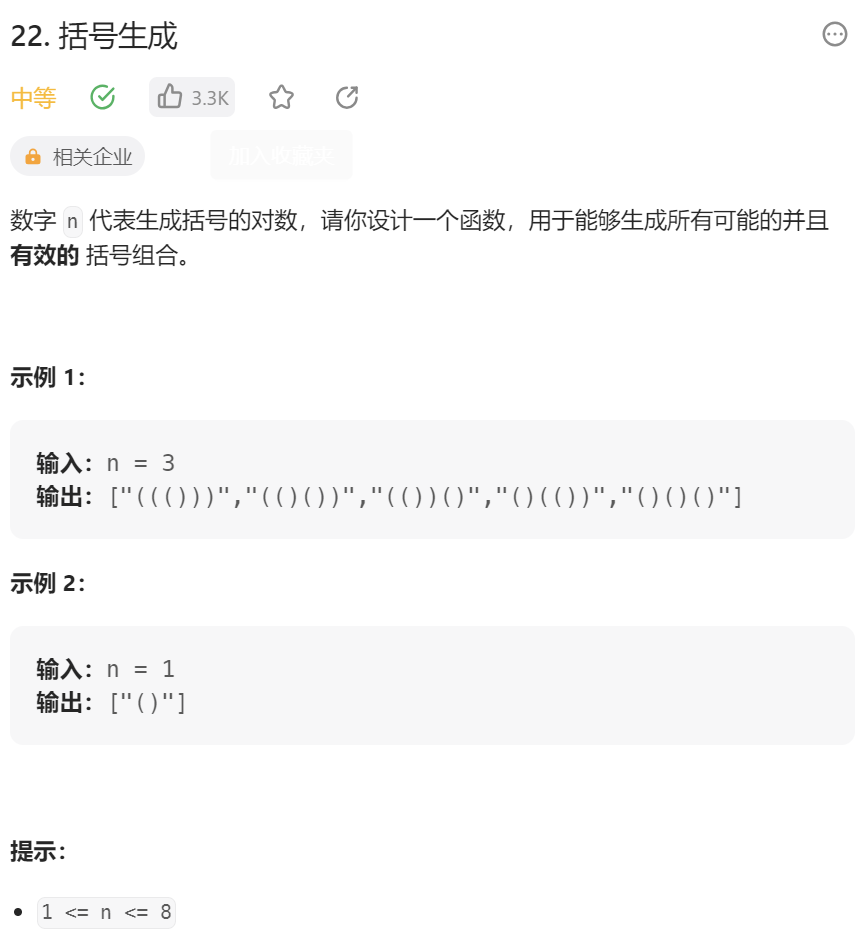
方法一:回溯
1
2
3
4
5
6
7
8
9
10
11
12
13
14
15
16
17
18
19
20
21
22
23
24
25
26
27
28
| class Solution {
public List<String> generateParenthesis(int n) {
this.n = n;
dfs(0, 0);
return res;
}
private void dfs(int left, int right) {
if (left + right == 2 * n) {
res.add(new String(sb));
return;
}
if (left < n) {
sb.append('(');
dfs(left + 1, right);
sb.deleteCharAt(sb.length() - 1);
}
if (left > right) {
sb.append(')');
dfs(left, right + 1);
sb.deleteCharAt(sb.length() - 1);
}
}
List<String> res = new ArrayList<>();
StringBuilder sb = new StringBuilder();
int n;
}
|
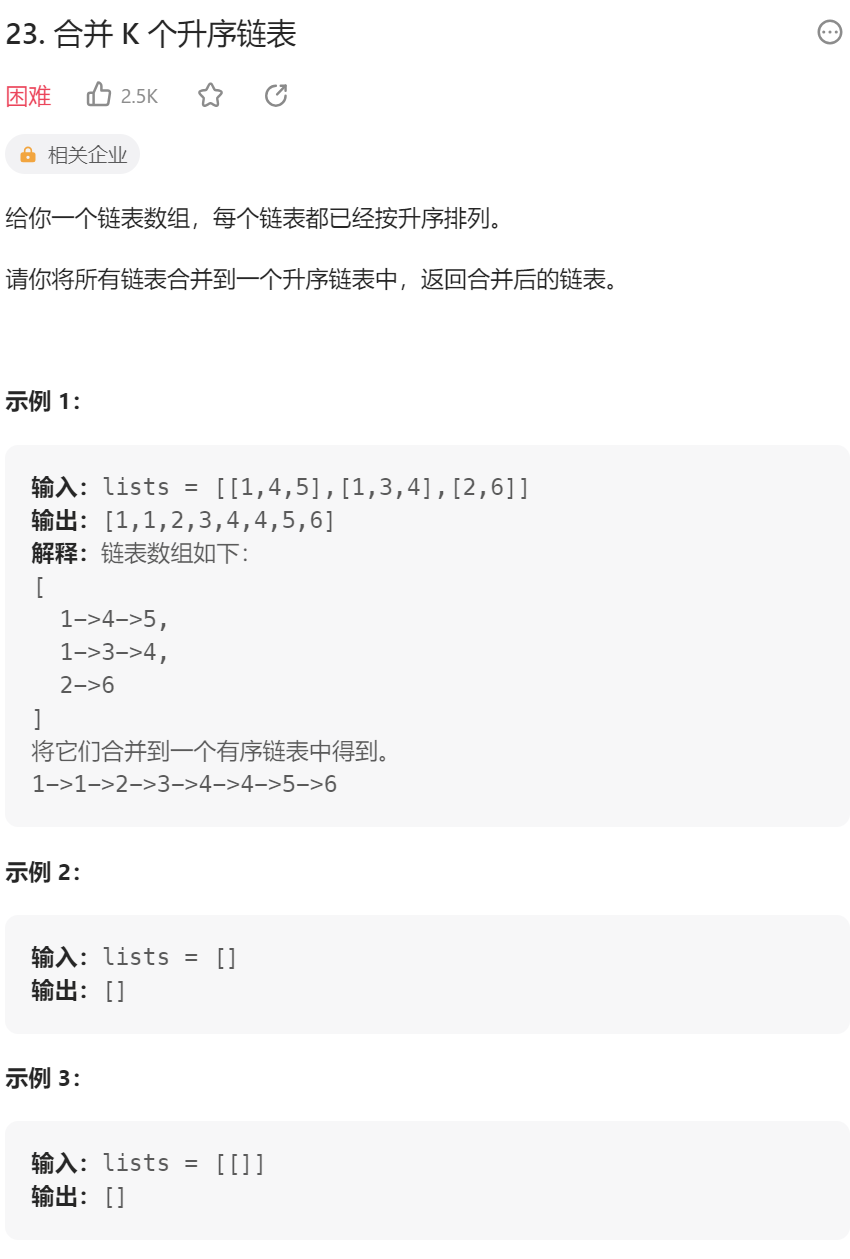
方法一:暴力
- 把所有ListNode的值加入小根堆
- 不断弹出小根堆,并创建新节点
1
2
3
4
5
6
7
8
9
10
11
12
13
14
15
16
17
18
19
20
21
22
23
24
25
26
27
28
|
class Solution {
public ListNode mergeKLists(ListNode[] lists) {
PriorityQueue<Integer> queue = new PriorityQueue<>();
for (ListNode node : lists) {
ListNode cur = node;
while (cur != null) {
queue.add(cur.val);
cur = cur.next;
}
}
ListNode dummyHead = new ListNode(-1), cur = dummyHead;
while (!queue.isEmpty()) {
cur.next = new ListNode(queue.poll());
cur = cur.next;
}
return dummyHead.next;
}
}
|
方法二:迭代
注意:debug很久,类比一道题:给出一个链表的头节点head,初始cur指向head,然后遍历cur,让cur = cur.next,head的位置没有变
1
2
|
lists[minIndex] = lists[minIndex].next;
|
代码
1
2
3
4
5
6
7
8
9
10
11
12
13
14
15
16
17
18
19
20
21
22
23
24
25
26
27
28
29
30
31
32
33
34
35
36
|
class Solution {
public ListNode mergeKLists(ListNode[] lists) {
ListNode dummyHead = new ListNode(-1), cur = dummyHead;
int k = lists.length;
while (true) {
int minIndex = -1, minVal = 10001;
ListNode minNode = null;
for (int i = 0; i < k; ++i) {
if (lists[i] == null)
continue;
if (minVal > lists[i].val) {
minVal = lists[i].val;
minIndex = i;
minNode = lists[i];
}
}
if (minIndex == -1)
break;
cur.next = minNode;
cur = cur.next;
lists[minIndex] = lists[minIndex].next;
}
return dummyHead.next;
}
}
|
方法三:小根堆优化方法二
不能按照以下方式初始化queue的大小,会报错
1
| PriorityQueue<ListNode> queue = new PriorityQueue<>(k, (v1, v2) -> v1.val - v2.val);
|
代码
1
2
3
4
5
6
7
8
9
10
11
12
13
14
15
16
17
18
19
20
21
22
23
24
25
26
27
28
29
|
class Solution {
public ListNode mergeKLists(ListNode[] lists) {
ListNode dummyHead = new ListNode(-1), cur = dummyHead;
int k = lists.length;
PriorityQueue<ListNode> queue = new PriorityQueue<>((v1, v2) -> v1.val - v2.val);
for (ListNode x : lists)
if (x != null)
queue.add(x);
while (!queue.isEmpty()) {
ListNode minNode = queue.poll();
cur.next = minNode;
cur = cur.next;
minNode = minNode.next;
if (minNode != null)
queue.add(minNode);
}
return dummyHead.next;
}
}
|
方法四:分治
1
2
3
4
5
6
7
8
9
10
11
12
13
14
15
16
17
18
19
20
21
22
23
24
25
26
27
28
29
30
31
32
33
34
35
36
37
38
39
|
class Solution {
public ListNode mergeKLists(ListNode[] lists) {
return merge(lists, 0, lists.length - 1);
}
public ListNode merge(ListNode[] lists, int l, int r) {
if (l == r)
return lists[l];
else if (l > r)
return null;
int mid = (l + r) >> 1;
ListNode l1 = merge(lists, l, mid);
ListNode l2 = merge(lists, mid + 1, r);
return mergeTwoList(l1, l2);
}
public ListNode mergeTwoList(ListNode l1, ListNode l2) {
if (l1 == null || l2 == null)
return l1 == null ? l2 : l1;
if (l1.val < l2.val) {
l1.next = mergeTwoList(l1.next, l2);
return l1;
}
else {
l2.next = mergeTwoList(l1, l2.next);
return l2;
}
}
}
|
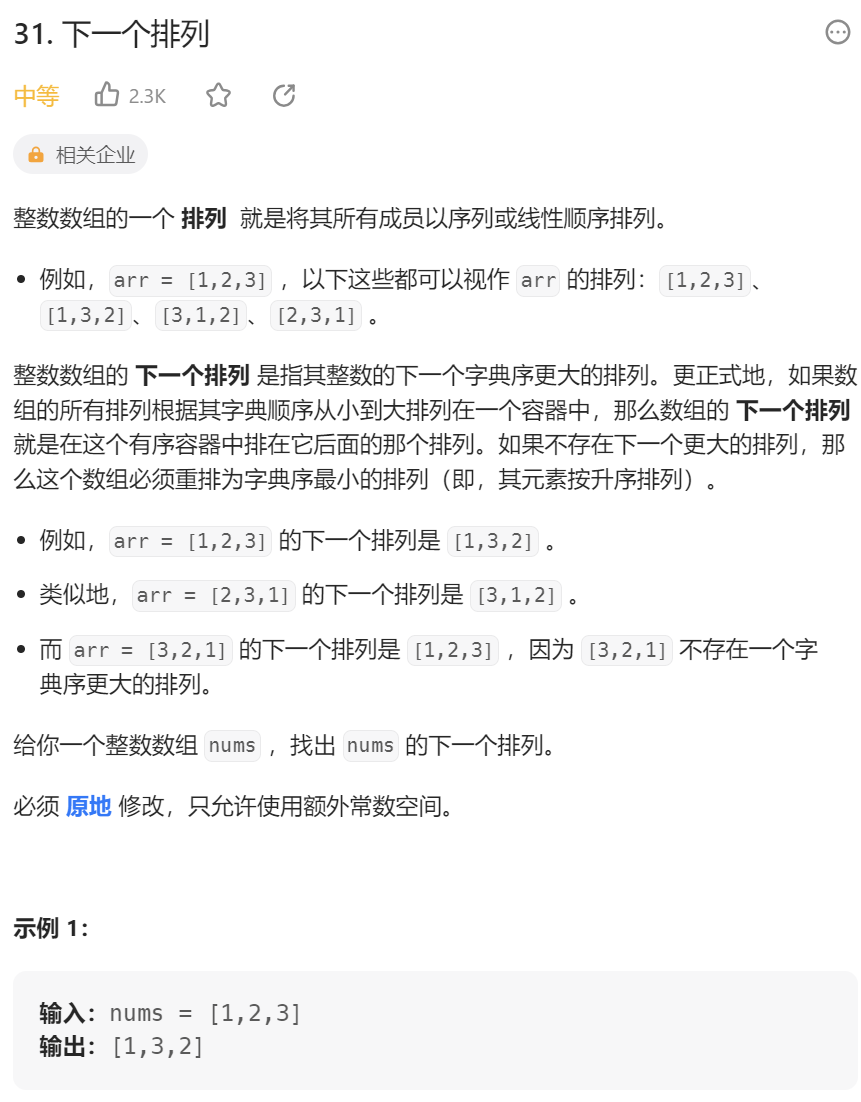
方法一:双指针模拟
题解
1
2
3
4
5
6
7
8
9
10
11
12
13
14
15
16
17
18
19
20
21
22
23
24
25
26
27
28
29
30
| class Solution {
public void nextPermutation(int[] nums) {
int n = nums.length, i = n - 2, j = n - 1, k = n - 1;
if (n == 1)
return;
while (i >= 0 && nums[i] >= nums[j]) {
--i;
--j;
}
if (i >= 0) {
while (nums[k] <= nums[i])
--k;
int temp = nums[i];
nums[i] = nums[k];
nums[k] = temp;
}
k = n - 1;
while (j < k) {
int temp = nums[j];
nums[j] = nums[k];
nums[k] = temp;
++j;
--k;
}
}
}
|
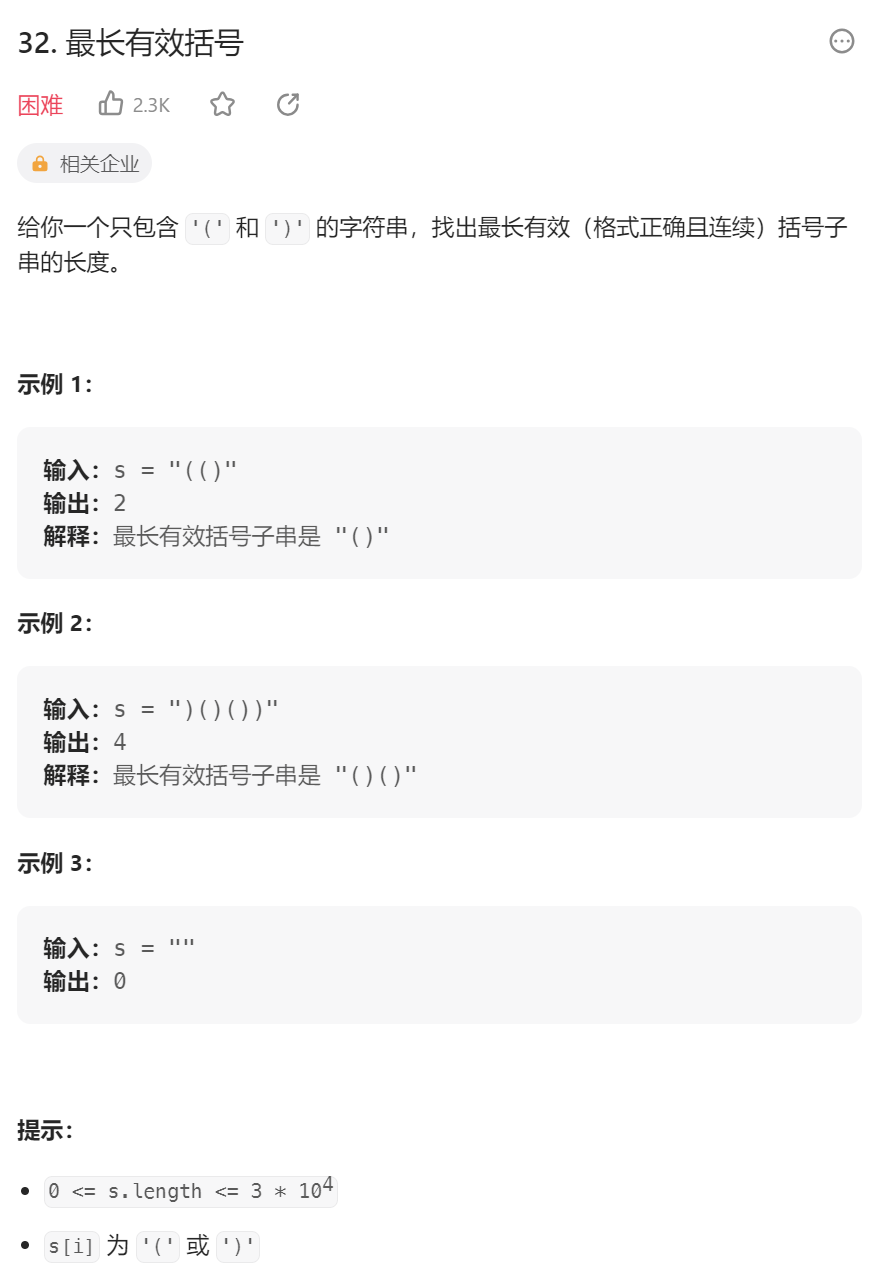
方法一:DP
1
2
3
4
5
6
7
8
9
10
11
12
13
14
15
16
17
18
19
20
21
22
23
24
25
26
27
28
29
30
31
32
33
34
35
36
| class Solution {
public int longestValidParentheses(String s) {
int n = s.length(), max = 0;
int[] dp = new int[n];
int start = 0;
while (start < n) {
if (s.charAt(start) == '(')
break;
++start;
}
for (int i = start + 1; i < n; ++i) {
char pre = s.charAt(i - 1), ch = s.charAt(i);
if (ch == ')') {
if (pre == '(')
dp[i] = 2 + (i - 2 > start ? dp[i - 2] : 0);
else {
if (dp[i - 1] > 0 && i - dp[i - 1] > start && s.charAt(i - dp[i - 1] - 1) == '(') {
dp[i] = 2 + dp[i - 1] + (i - dp[i - 1] - 2 > start ? dp[i - dp[i - 1] - 2] : 0);
}
}
}
max = Math.max(max, dp[i]);
}
return max;
}
}
|