数位 DP
灵神视频
数位是指把一个数字按照个、十、百、千等等一位一位地拆开,关注它每一位上的数字。如果拆的是十进制数,那么每一位数字都是 0~9,其他进制可类比十进制。
数位 DP:用来解决一类特定问题,这种问题比较好辨认,一般具有这几个特征:
- 要求统计满足一定条件的数的数量(即,最终目的为计数);
- 这些条件经过转化后可以使用「数位」的思想去理解和判断;
- 输入会提供一个数字区间(有时也只提供上界)来作为统计的限制;
- 上界很大(比如
 ),暴力枚举验证会超时。
数位 DP 的基本原理:
考虑人类计数的方式,最朴素的计数就是从小到大开始依次加一。但我们发现对于位数比较多的数,这样的过程中有许多重复的部分。例如,从 7000 数到 7999、从 8000 数到 8999、和从 9000 数到 9999 的过程非常相似,它们都是后三位从 000 变到 999,不一样的地方只有千位这一位,所以我们可以把这些过程归并起来,将这些过程中产生的计数答案也都存在一个通用的数组里。此数组根据题目具体要求设置状态,用递推或 DP 的方式进行状态转移。
数位 DP 中通常会利用常规计数问题技巧,比如把一个区间内的答案拆成两部分相减(即 )
那么有了通用答案数组,接下来就是统计答案。统计答案可以选择记忆化搜索,也可以选择循环迭代递推。为了不重不漏地统计所有不超过上限的答案,要从高到低枚举每一位,再考虑每一位都可以填哪些数字,最后利用通用答案数组统计答案。
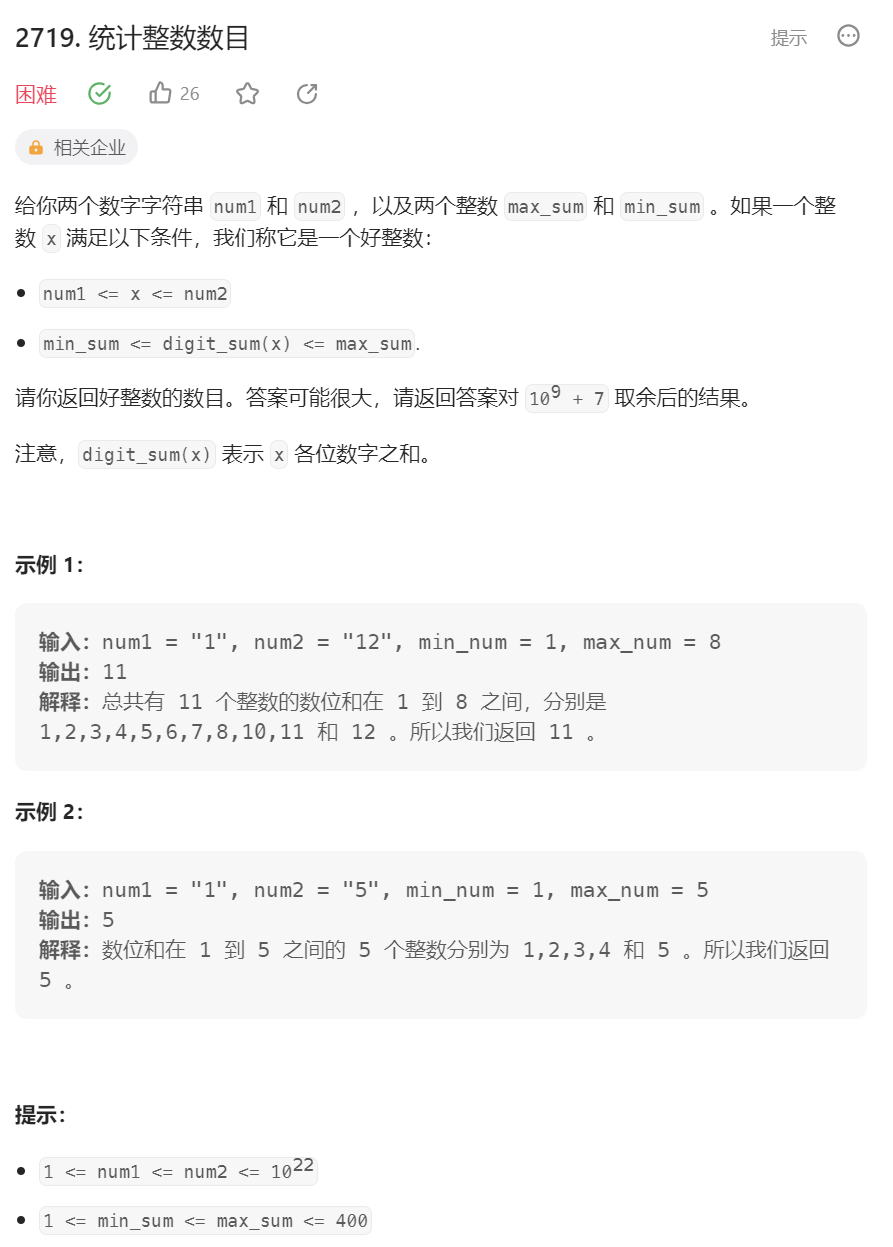
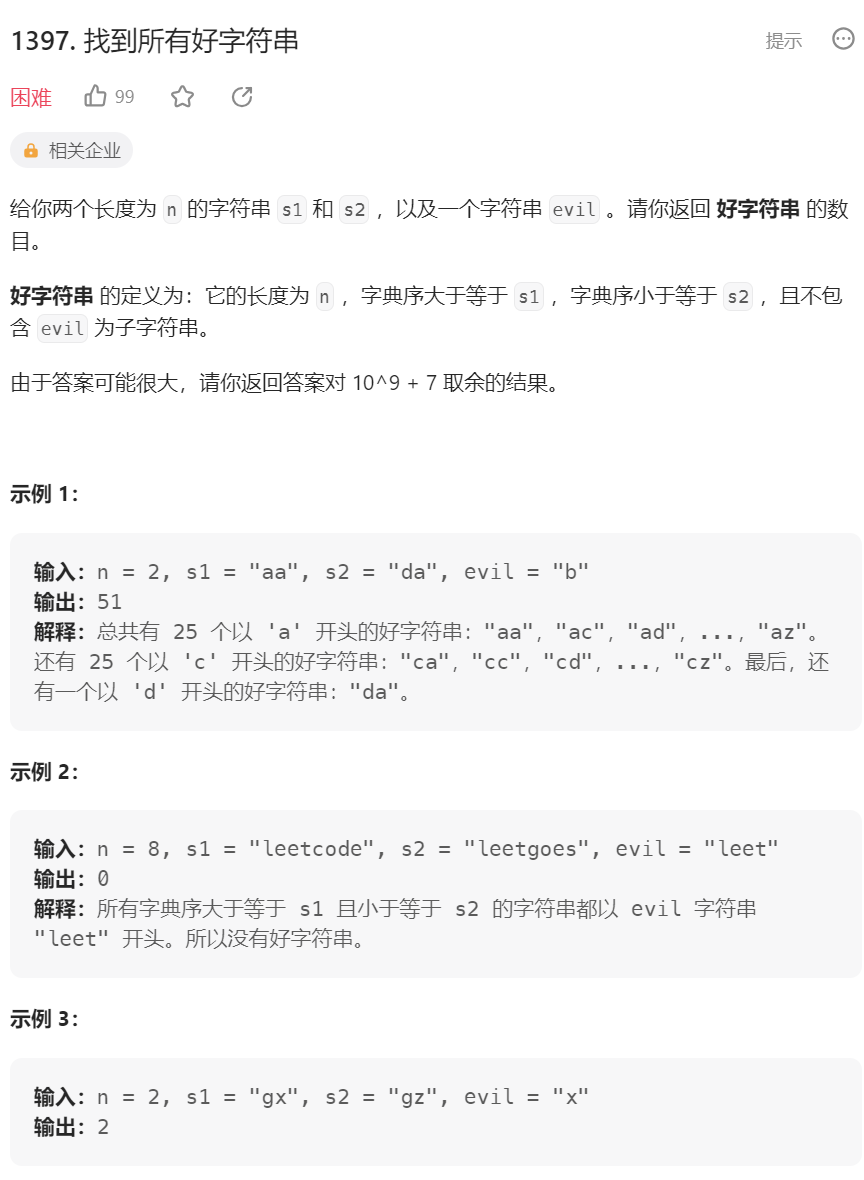
方法一:数位DP
题解
1
2
3
4
5
6
7
8
9
10
11
12
13
14
15
16
17
18
19
20
21
22
23
24
25
26
27
28
29
30
31
32
33
34
35
36
37
38
39
40
41
42
| class Solution {
int min_sum, max_sum, n, MOD = (int) (1e9 + 7);
int[][] dp;
public int count(String num1, String num2, int min_sum, int max_sum) {
this.min_sum = min_sum;
this.max_sum = max_sum;
int res = count(num2) - count(num1) + MOD;
int temp = count(num2);
int sum = 0;
for (int i = 0; i < num1.length(); ++i)
sum += num1.charAt(i) - '0';
if (sum >= min_sum && sum <= max_sum)
++res;
return res % MOD;
}
private int count(String num) {
n = num.length();
dp = new int[n][401];
for (int[] arr : dp)
Arrays.fill(arr, -1);
return dfs(num, 0, 0, true);
}
private int dfs(String num, int index, int preSum, boolean isLimit) {
if (preSum > max_sum)
return 0;
if (index == num.length())
return preSum >= min_sum ? 1 : 0;
if (!isLimit && dp[index][preSum] != -1)
return dp[index][preSum];
int upperBound = isLimit ? num.charAt(index) - '0' : 9;
int res = 0;
for (int i = 0; i <= upperBound; ++i)
res = (res + dfs(num, index + 1, preSum + i, isLimit && i == upperBound)) % MOD;
if (!isLimit)
dp[index][preSum] = res;
return res;
}
}
|
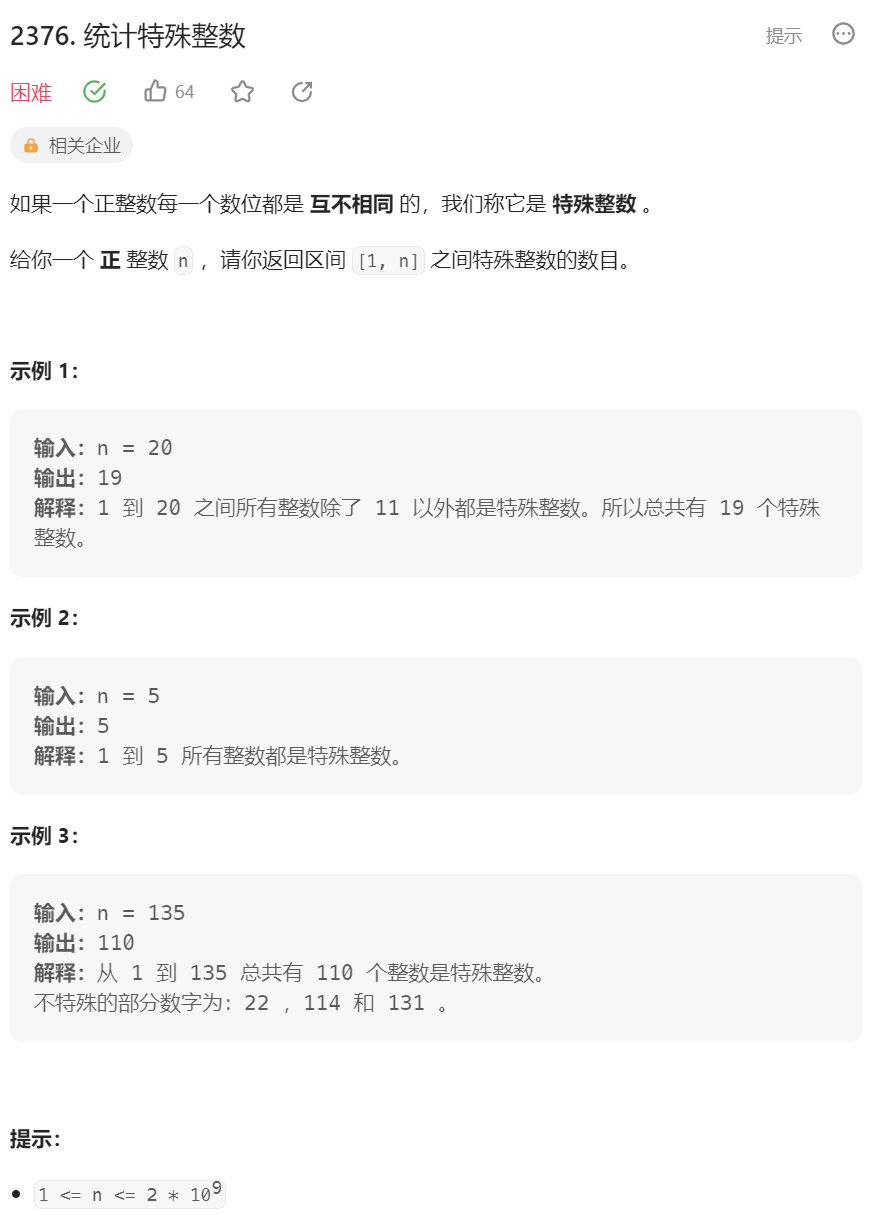
方法一:数位DP
1
2
3
4
5
6
7
8
9
10
11
12
13
14
15
16
17
18
19
20
21
22
23
24
25
26
27
28
29
30
31
32
33
| class Solution {
int n;
int[][] dp;
String num;
public int countSpecialNumbers(int n) {
num = String.valueOf(n);
this.n = num.length();
dp = new int[this.n][1 << 10];
for (int[] arr : dp)
Arrays.fill(arr, -1);
return dfs(0, 0, true, false);
}
private int dfs(int index, int mask, boolean isLimit, boolean isNum) {
if (index == n)
return isNum ? 1 : 0;
if (!isLimit && isNum && dp[index][mask] != -1)
return dp[index][mask];
int res = 0;
if (!isNum)
res += dfs(index + 1, mask, false, false);
int upperBound = isLimit ? num.charAt(index) - '0' : 9;
for (int i = isNum ? 0 : 1; i <= upperBound; ++i)
if ((mask >> i & 1) == 0)
res += dfs(index + 1, mask | 1 << i, isLimit && i == upperBound, true);
if (!isLimit && isNum)
dp[index][mask] = res;
return res;
}
}
|

方法一:数位DP
1
2
3
4
5
6
7
8
9
10
11
12
13
14
15
16
17
18
19
20
21
22
23
24
25
26
27
28
| class Solution {
int n;
int[][] dp;
String num;
public int countDigitOne(int n) {
num = String.valueOf(n);
dp = new int[num.length()][9];
for (int[] arr : dp)
Arrays.fill(arr, -1);
this.n = num.length();
return dfs(0, 0, true);
}
private int dfs(int index, int count, boolean isLimit) {
if (index == n)
return count;
if (!isLimit && dp[index][count] != -1)
return dp[index][count];
int res = 0, cur = num.charAt(index) - '0';
int upperBound = isLimit ? cur : 9;
for (int i = 0; i <= upperBound; ++i)
res += dfs(index + 1, count + (i == 1 ? 1 : 0), isLimit && i == upperBound);
if (!isLimit)
dp[index][count] = res;
return res;
}
}
|

方法一:数位DP
把上一题的1改成2即可
1
2
3
4
5
6
7
8
9
10
11
12
13
14
15
16
17
18
19
20
21
22
23
24
25
26
27
28
| class Solution {
int n;
int[][] dp;
String num;
public int numberOf2sInRange(int n) {
num = String.valueOf(n);
dp = new int[num.length()][9];
for (int[] arr : dp)
Arrays.fill(arr, -1);
this.n = num.length();
return dfs(0, 0, true);
}
private int dfs(int index, int count, boolean isLimit) {
if (index == n)
return count;
if (!isLimit && dp[index][count] != -1)
return dp[index][count];
int res = 0, cur = num.charAt(index) - '0';
int upperBound = isLimit ? cur : 9;
for (int i = 0; i <= upperBound; ++i)
res += dfs(index + 1, count + (i == 2 ? 1 : 0), isLimit && i == upperBound);
if (!isLimit)
dp[index][count] = res;
return res;
}
}
|
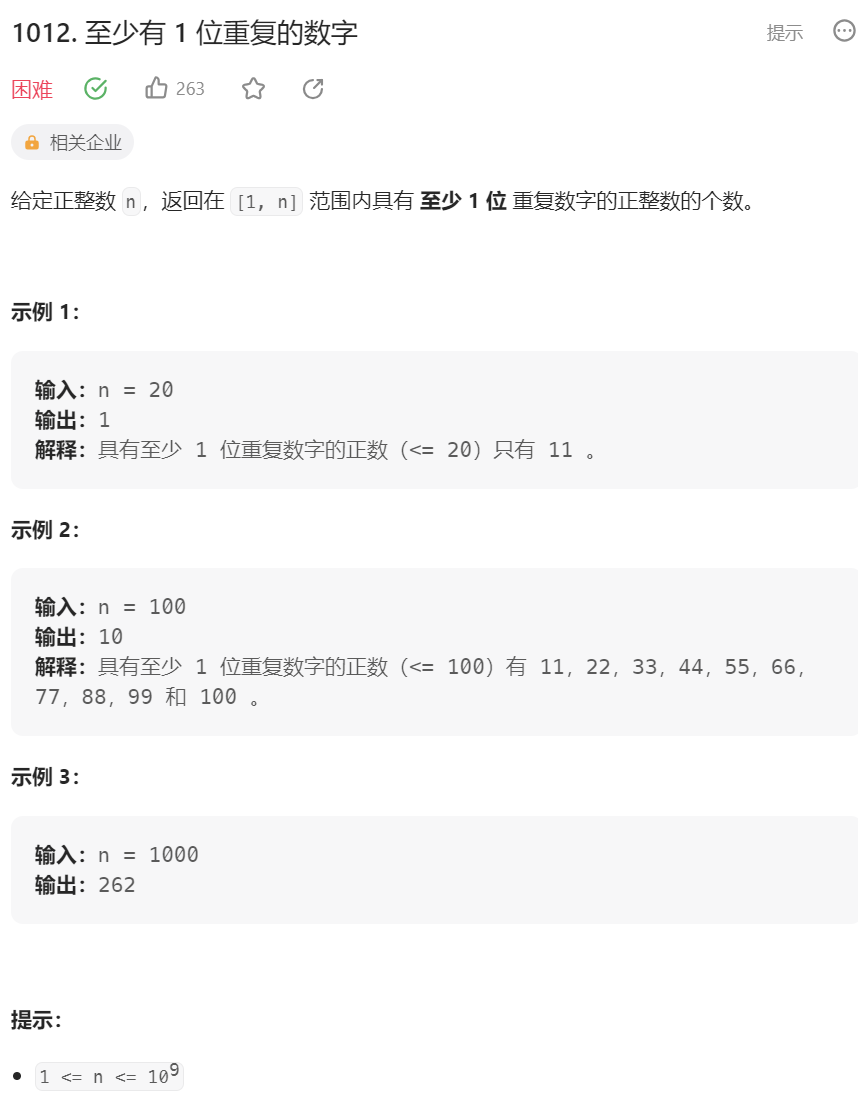
方法一:数位DP
n - 2719. 统计整数数目返回的结果
1
2
3
4
5
6
7
8
9
10
11
12
13
14
15
16
17
18
19
20
21
22
23
24
25
26
27
28
29
30
31
32
33
34
35
36
37
| class Solution {
public int numDupDigitsAtMostN(int n) {
return n - countSpecialNumbers(n);
}
int n;
int[][] dp;
String num;
public int countSpecialNumbers(int n) {
num = String.valueOf(n);
this.n = num.length();
dp = new int[this.n][1 << 10];
for (int[] arr : dp)
Arrays.fill(arr, -1);
return dfs(0, 0, true, false);
}
private int dfs(int index, int mask, boolean isLimit, boolean isNum) {
if (index == n)
return isNum ? 1 : 0;
if (!isLimit && isNum && dp[index][mask] != -1)
return dp[index][mask];
int res = 0;
if (!isNum)
res += dfs(index + 1, mask, false, false);
int upperBound = isLimit ? num.charAt(index) - '0' : 9;
for (int i = isNum ? 0 : 1; i <= upperBound; ++i)
if ((mask >> i & 1) == 0)
res += dfs(index + 1, mask | 1 << i, isLimit && i == upperBound, true);
if (!isLimit && isNum)
dp[index][mask] = res;
return res;
}
}
|
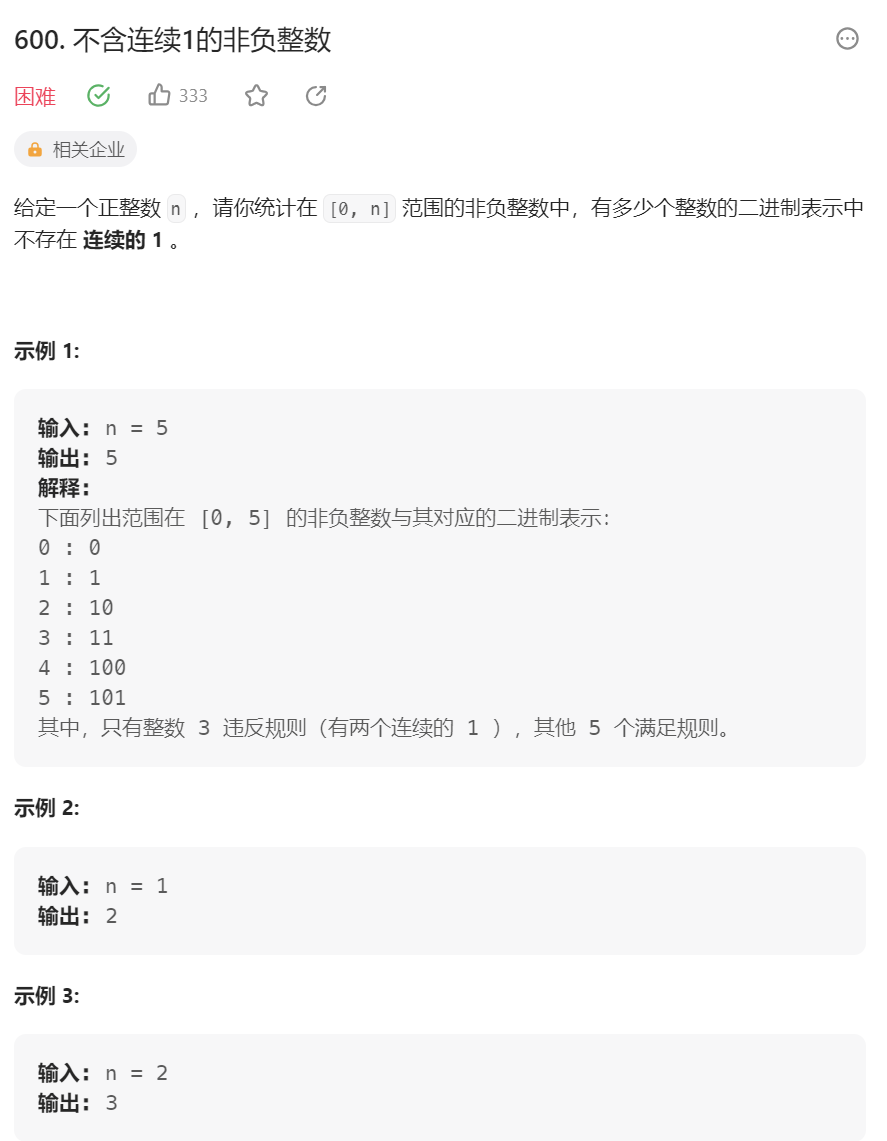
方法一:数位DP
注意:res += dfs(index + 1, i, isLimit && i == upperBound);不要把i写成cur!!!
1
2
3
4
5
6
7
8
9
10
11
12
13
14
15
16
17
18
19
20
21
22
23
24
25
26
27
28
29
30
31
| class Solution {
int length;
int[][] dp;
String num;
public int findIntegers(int n) {
num = Integer.toBinaryString(n);
length = num.length();
dp = new int[length][2];
for (int[] arr : dp)
Arrays.fill(arr, -1);
return dfs(0, 0, true);
}
private int dfs(int index, int pre, boolean isLimit) {
if (index == length)
return 1;
if (!isLimit && dp[index][pre] != -1)
return dp[index][pre];
int res = 0, cur = num.charAt(index) - '0';
int upperBound = isLimit ? cur : 1;
for (int i = 0; i <= upperBound; ++i) {
if (pre == 1 && i == 1)
continue;
res += dfs(index + 1, i, isLimit && i == upperBound);
}
if (!isLimit)
dp[index][pre] = res;
return res;
}
}
|
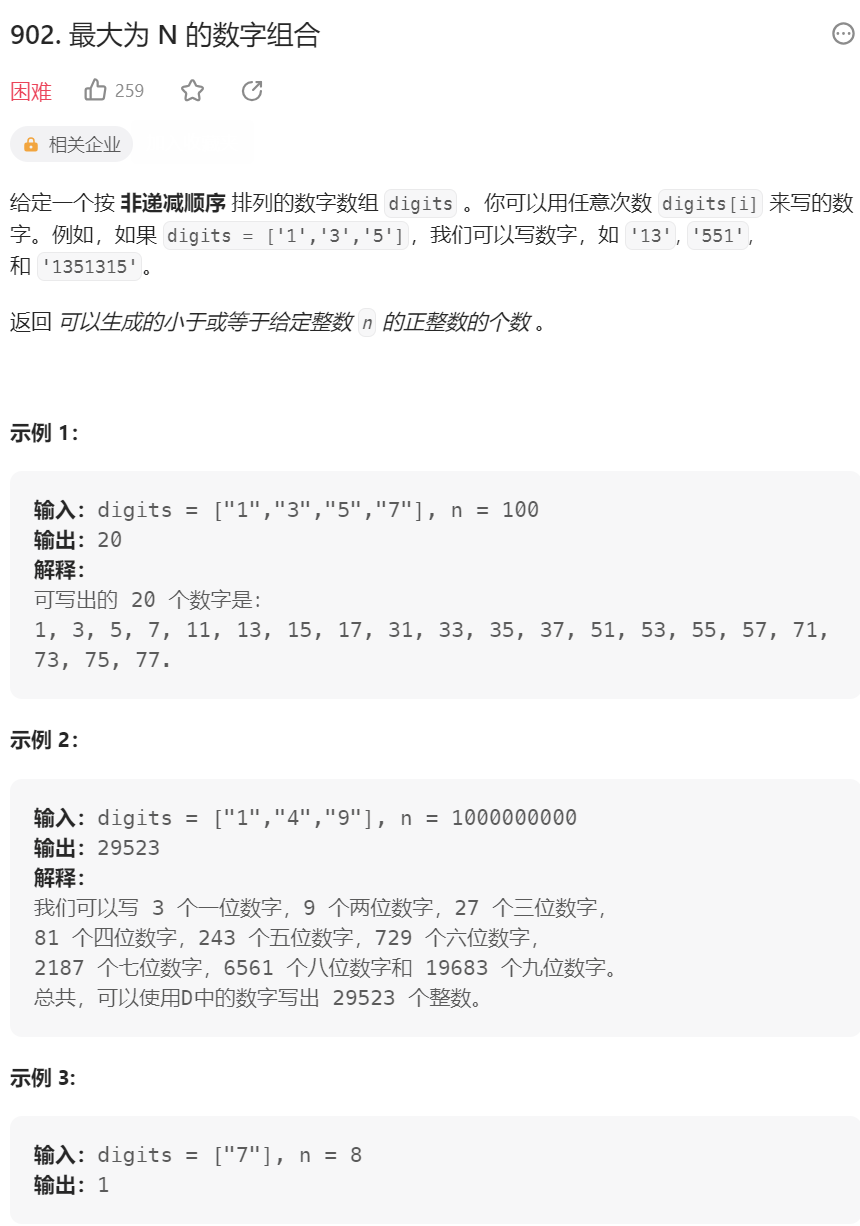
方法一:数位DP
1
2
3
4
5
6
7
8
9
10
11
12
13
14
15
16
17
18
19
20
21
22
23
24
25
26
27
28
29
30
31
32
33
34
35
| class Solution {
String[] digits;
int length, n;
String num;
int[] dp;
public int atMostNGivenDigitSet(String[] digits, int n) {
this.n = n;
this.digits = digits;
num = String.valueOf(n);
length = num.length();
dp = new int[length];
Arrays.fill(dp, -1);
return dfs(0, true, false);
}
private int dfs(int index, boolean isLimit, boolean isNum) {
if (index == length)
return isNum ? 1 : 0;
if (!isLimit && isNum && dp[index] != -1)
return dp[index];
int res = 0, cur = num.charAt(index) - '0';
if (!isNum)
res += dfs(index + 1, false, false);
for (String x : digits) {
int val = Integer.parseInt(x);
if (isLimit && val > cur)
break;
res += dfs(index + 1, isLimit && val == cur, true);
}
if (!isLimit && isNum)
dp[index] = res;
return res;
}
}
|
![{[l, r]} = {[0, r]}-_{[0, l - 1]}](/img/loading.gif) )
)