lcp365

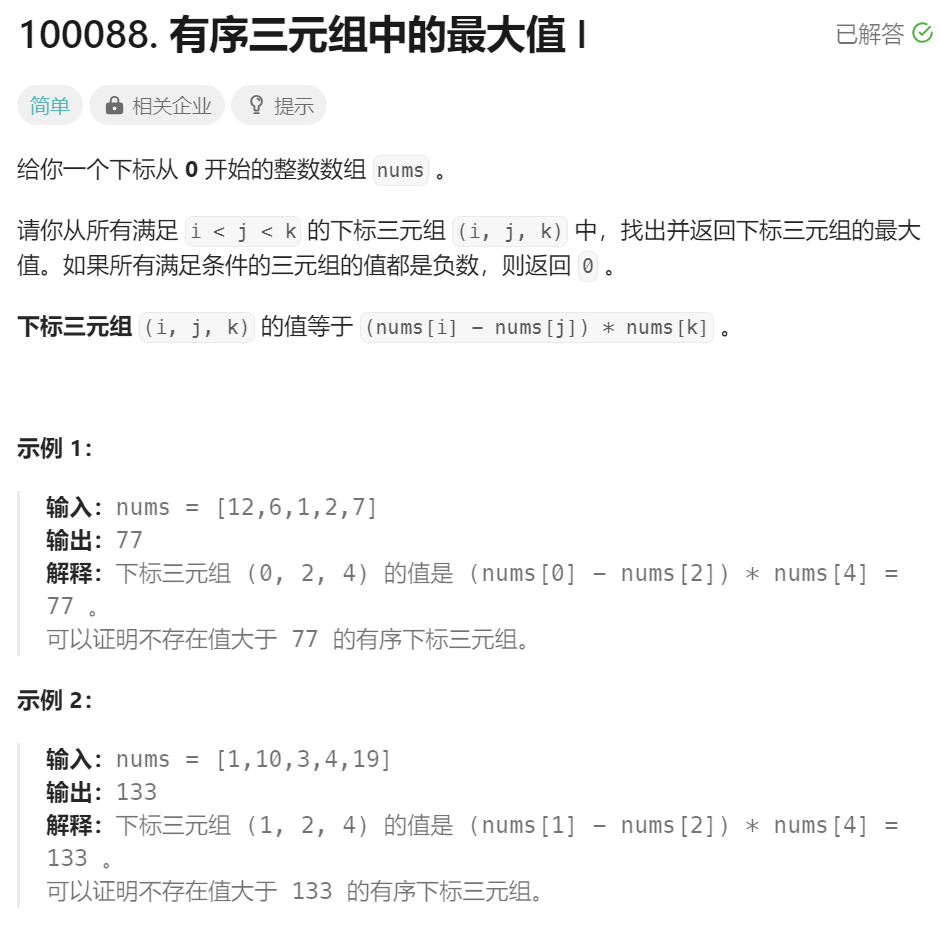
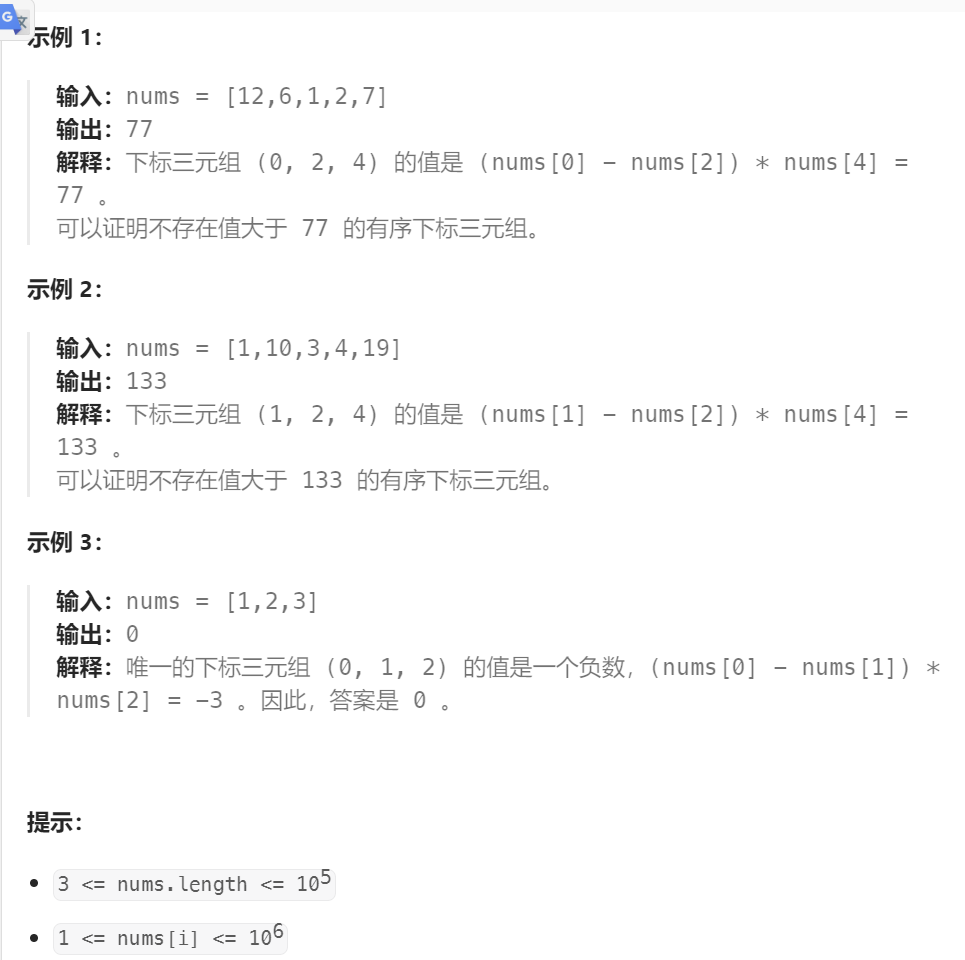
100088. 有序三元组中的最大值 I

方法一:暴力

1
2
3
4
5
6
7
8
9
10
11
12
13
class Solution {
public long maximumTripletValue(int[] nums) {
long n = nums.length, res = 0;
for (int i = 0; i < n; ++i) {
for (int j = i + 1; j < n; ++j) {
for (int k = j + 1; k < n; ++k) {
res = Math.max(res, (long) (nums[i] - nums[j]) * nums[k]);
}
}
}
return Math.max(res, 0);
}
}

100086. 有序三元组中的最大值 II

方法一:滑动窗口

1
2
3
4
5
6
7
8
9
10
11
12
13
14
15
class Solution {
public long maximumTripletValue(int[] nums) {
int n = nums.length, l = 0;
long res = 0, diff = 0, preMax = Integer.MIN_VALUE, maxK = 0;
for (int i = 1; i < n - 1; ++i) {
diff = nums[l] - nums[i];
if (nums[l] < nums[i])
l = i;
if (preMax < diff)
preMax = diff;
res = Math.max(res, preMax * nums[i + 1]);
}
return Math.max(res, 0);
}
}

方法二:维护左右最大值

1
2
3
4
5
6
7
8
9
10
11
12
13
14
15
class Solution {
public long maximumTripletValue(int[] nums) {
int n = nums.length;
long res = 0, max = nums[n - 1];
int[] l = new int[n];
l[0] = nums[0];
for (int i = 1; i < n; ++i)
l[i] = Math.max(nums[i], l[i - 1]);
for (int i = n - 2; i >= 0; --i) {
res = Math.max(res, (l[i] - nums[i]) * max);
max = Math.max(max, nums[i]);
}
return Math.max(res, 0);
}
}

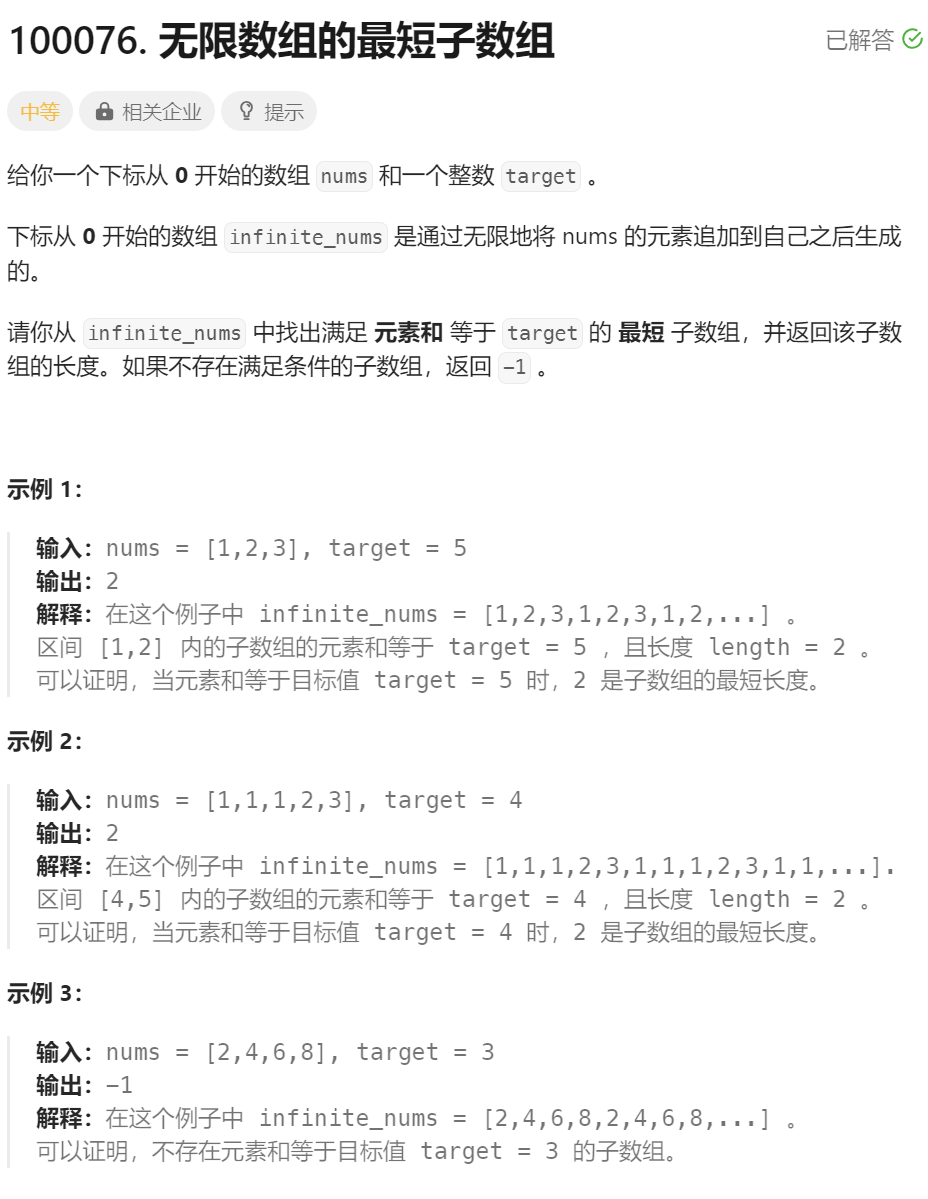
100076. 无限数组的最短子数组

方法二:滑动窗口

1
2
3
4
5
6
7
8
9
10
11
12
13
14
15
16
17
18
19
20
21
class Solution {
public int minSizeSubarray(int[] nums, int target) {
int n = nums.length, res = Integer.MAX_VALUE / 2, sum = 0;
long s = 0;
for (int x : nums)
sum += x;
int cnt = target / sum;
target = target % sum;
int l = 0;
for (int i = 0; i < 2 * n; ++i) {
s += nums[i % n];
while (s > target) {
s -= nums[l % n];
++l;
}
if (s == target)
res = Math.min(res, i - l + 1);
}
return res == Integer.MAX_VALUE / 2 ? -1 : res + cnt * n;
}
}

方法一:前缀和 + HashMap

1
2
3
4
5
6
7
8
9
10
11
12
13
14
15
16
17
18
19
20
21
22
23
24
25
26
27
28
29
30
31
32
33
34
class Solution {
public int minSizeSubarray(int[] nums, int t) {
int n = nums.length;
long res = Integer.MAX_VALUE / 2;
Map<Long, Integer> map = new HashMap<>();
int[] arr = new int[3 * n];
long sum = 0, target = t;
for (int i = 0; i < 3 * n; ++i) {
arr[i] = nums[i % n];
if (i < n)
sum += nums[i];
}
boolean flag = false;
long extra = 0;
if (target >= 2 * sum) {
extra = target / sum * n;
target %= sum;
flag = true;
}
sum = 0;
boolean find = false;
for (int i = 0; i < 3 * n; ++i) {
sum += arr[i];
map.put(sum, i);
if (map.containsKey(sum - target)) {
find = true;
res = Math.min(res, i - map.get(sum - target));
}
}
if (flag)
res += extra;
return !find ? -1 : (int) res;
}
}

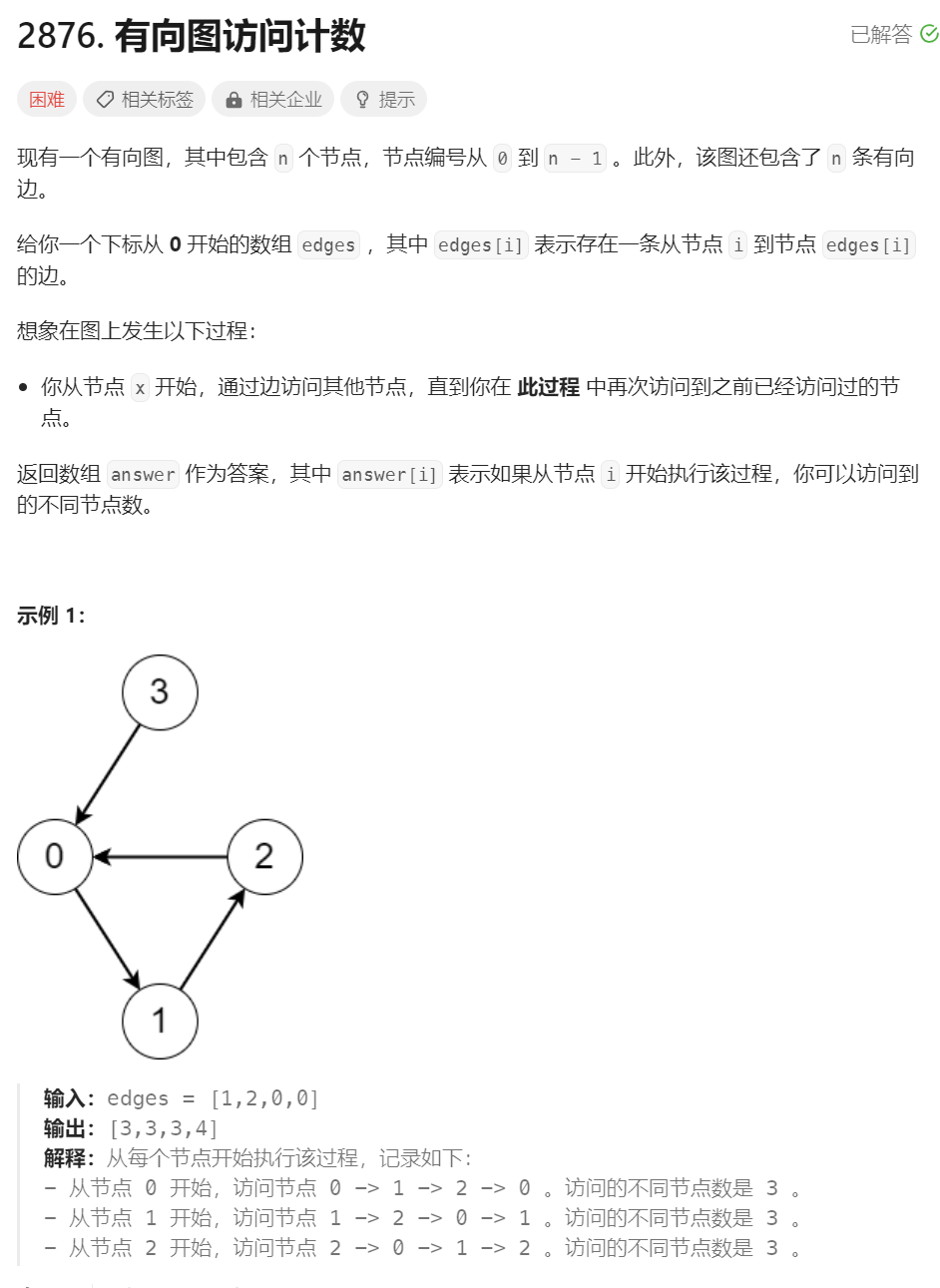
2876. 有向图访问计数

方法一:拓扑排序 + 反向图

注意内向基环图可以包含多个环!!!

1
2
3
4
5
6
7
8
9
10
11
12
13
14
15
16
17
18
19
20
21
22
23
24
25
26
27
28
29
30
31
32
33
34
35
36
37
38
39
40
41
42
43
44
45
46
47
48
49
class Solution {
public int[] countVisitedNodes(List<Integer> g) {
int n = g.size();
int[] degree = new int[n];
List<Integer>[] rg = new List[n];
Arrays.setAll(rg, e -> new ArrayList<>());
for (int i = 0; i < n; ++i) {
int from = i, to = g.get(i);
degree[to]++;
rg[to].add(from);
}
Queue<Integer> queue = new LinkedList<>();
for (int i = 0; i < n; ++i)
if (degree[i] == 0)
queue.offer(i);
while (!queue.isEmpty()) {
int node = queue.poll();
int next = g.get(node);
if (--degree[next] == 0)
queue.offer(next);
}
int[] res = new int[n];
for (int i = 0; i < n; ++i) {
if (degree[i] <= 0)
continue;
List<Integer> ring = new ArrayList<>();
int j = i;
while (true) {
ring.add(j);
degree[j] = -1;
j = g.get(j);
if (j == i)
break;
}
for (int x : ring)
dfs(x, ring.size(), rg, res, degree);
}
return res;
}

private void dfs(int x, int size, List<Integer>[] rg, int[] res, int[] degree) {
res[x] = size;
for (int next : rg[x]) {
if (degree[next] == 0)
dfs(next, size + 1, rg, res, degree);
}
}

}

lcp365
https://leopol1d.github.io/2023/10/01/lcp365/
作者
Leopold
发布于
2023年10月1日
许可协议