lcp344

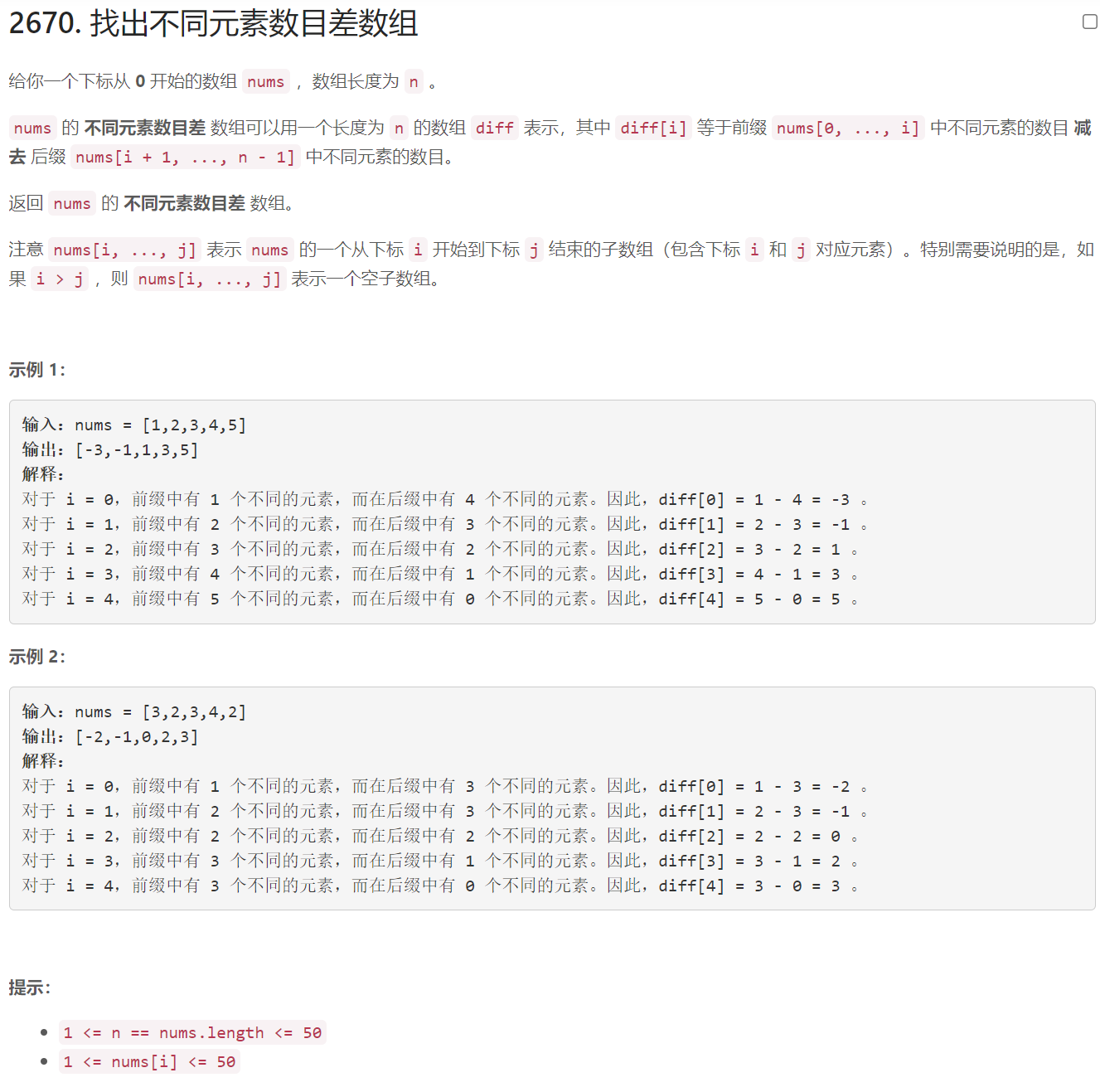
找出不同元素数目差数组

方法一:模拟

1
2
3
4
5
6
7
8
9
10
11
12
13
14
15
class Solution {
public int[] distinctDifferenceArray(int[] nums) {
int n = nums.length;
int[] res = new int[n];
for (int i = 0; i < n; ++i) {
Set<Integer> preSet = new HashSet<>(), postSet = new HashSet<>();
for (int j = i; j >= 0; --j)
preSet.add(nums[j]);
for (int j = i + 1; j < n; ++j)
postSet.add(nums[j]);
res[i] = preSet.size() - postSet.size();
}
return res;
}
}

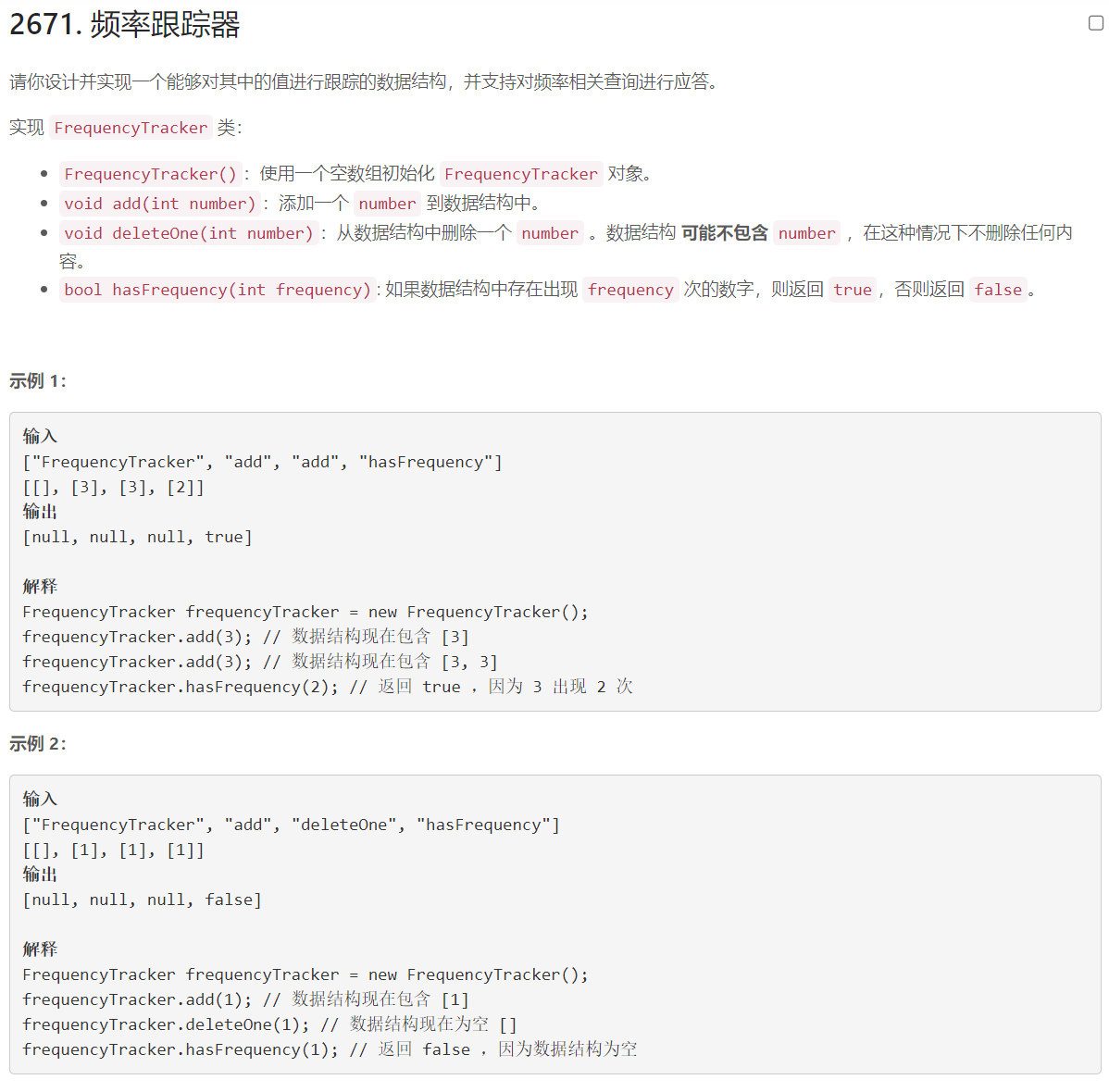
频率跟踪器

方法一:HashMap

1
2
3
4
5
6
7
8
9
10
11
12
13
14
15
16
17
18
19
20
21
22
23
24
25
26
27
28
29
30
31
32
33
34
35
36
37
38
39
40
41
42
43
44
45
46
47
48
class FrequencyTracker {

int[] nums;
Map<Integer, Set<Integer>> map;

public FrequencyTracker() {
nums = new int[100001];
map = new HashMap<>();
}

public void add(int number) {
++nums[number];
int freq = nums[number];
if (!map.containsKey(freq))
map.put(freq, new HashSet<>());
map.get(freq).add(number);
if (map.containsKey(freq - 1))
map.get(freq - 1).remove(number);
}

public void deleteOne(int number) {
int freq = nums[number];
if (nums[number] == 0)
return;
else {
--nums[number];
map.get(freq).remove(number);
if (!map.containsKey(freq - 1))
map.put(freq - 1, new HashSet<>());
map.get(freq - 1).add(number);
}
}

public boolean hasFrequency(int frequency) {
if (map.containsKey(frequency) && map.get(frequency).size() > 0)
return true;
else
return false;
}
}

/**
* Your FrequencyTracker object will be instantiated and called as such:
* FrequencyTracker obj = new FrequencyTracker();
* obj.add(number);
* obj.deleteOne(number);
* boolean param_3 = obj.hasFrequency(frequency);
*/

方法二:前后缀分解

1
2
3
4
5
6
7
8
9
10
11
12
13
14
15
16
17
class Solution {
public int[] distinctDifferenceArray(int[] nums) {
int n = nums.length;
int[] res = new int[n], suffix = new int[n + 1];
Set<Integer> set = new HashSet<>();
for (int i = n - 1; i >= 0; --i) {
set.add(nums[i]);
suffix[i] = set.size();
}
set.clear();
for (int i = 0; i < n; ++i) {
set.add(nums[i]);
res[i] = set.size() - suffix[i + 1];
}
return res;
}
}

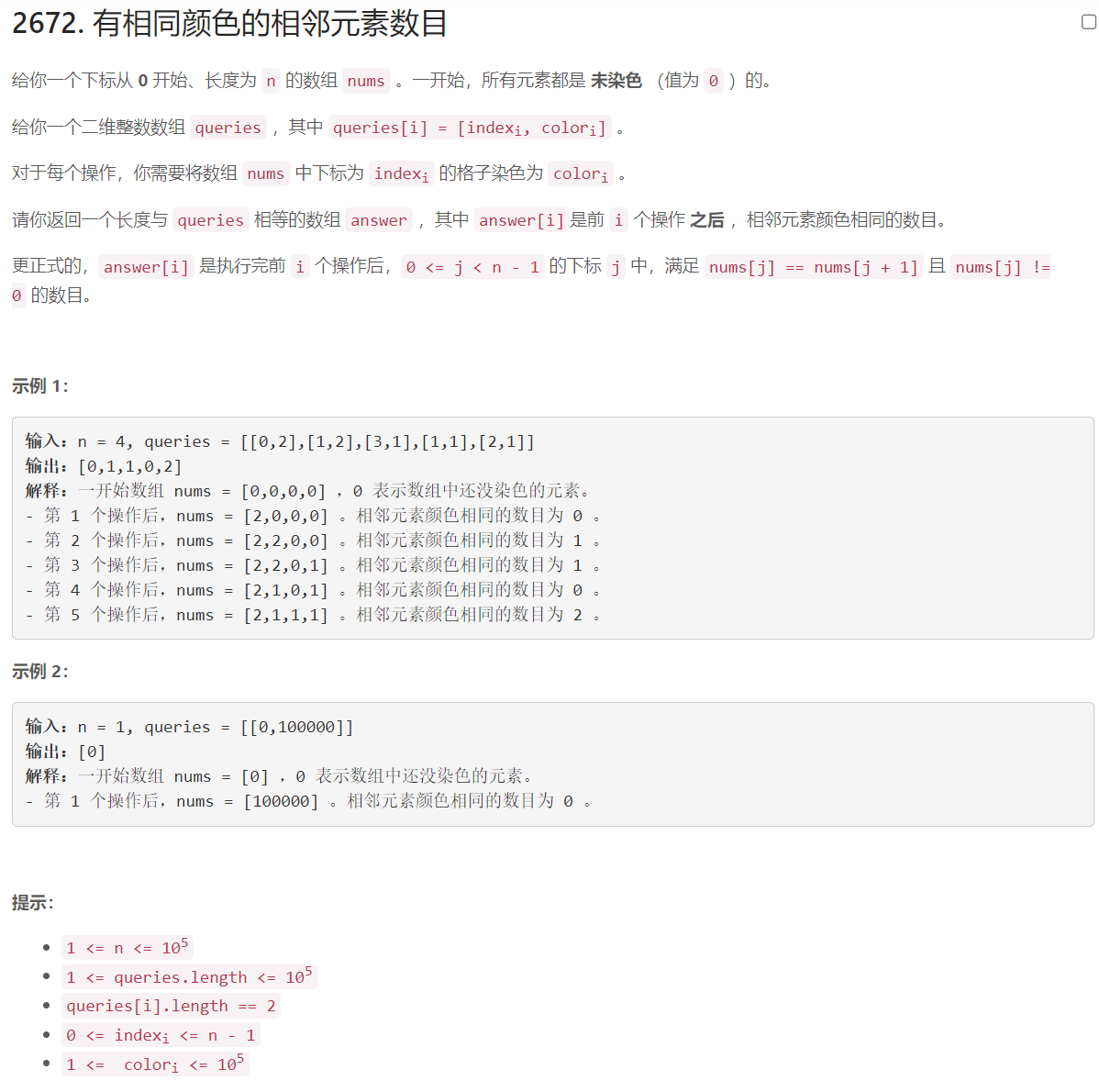
有相同颜色的相邻元素数目

方法一:模拟

1
2
3
4
5
6
7
8
9
10
11
12
13
14
15
16
17
18
19
20
21
22
class Solution {
public int[] colorTheArray(int n, int[][] queries) {
int[] res = new int[queries.length], nums = new int[n + 1];
int count = 0, idx = 0;
for (int[] query : queries) {
int index = query[0], color = query[1];
if (nums[index] > 0) {
if (index > 0 && nums[index] == nums[index - 1])
--count;
if (index < n && nums[index] == nums[index + 1])
--count;
}
nums[index] = color;
if (index > 0 && nums[index] == nums[index - 1])
++count;
if (index < n && nums[index] == nums[index + 1])
++count;
res[idx++] = count;
}
return res;
}
}

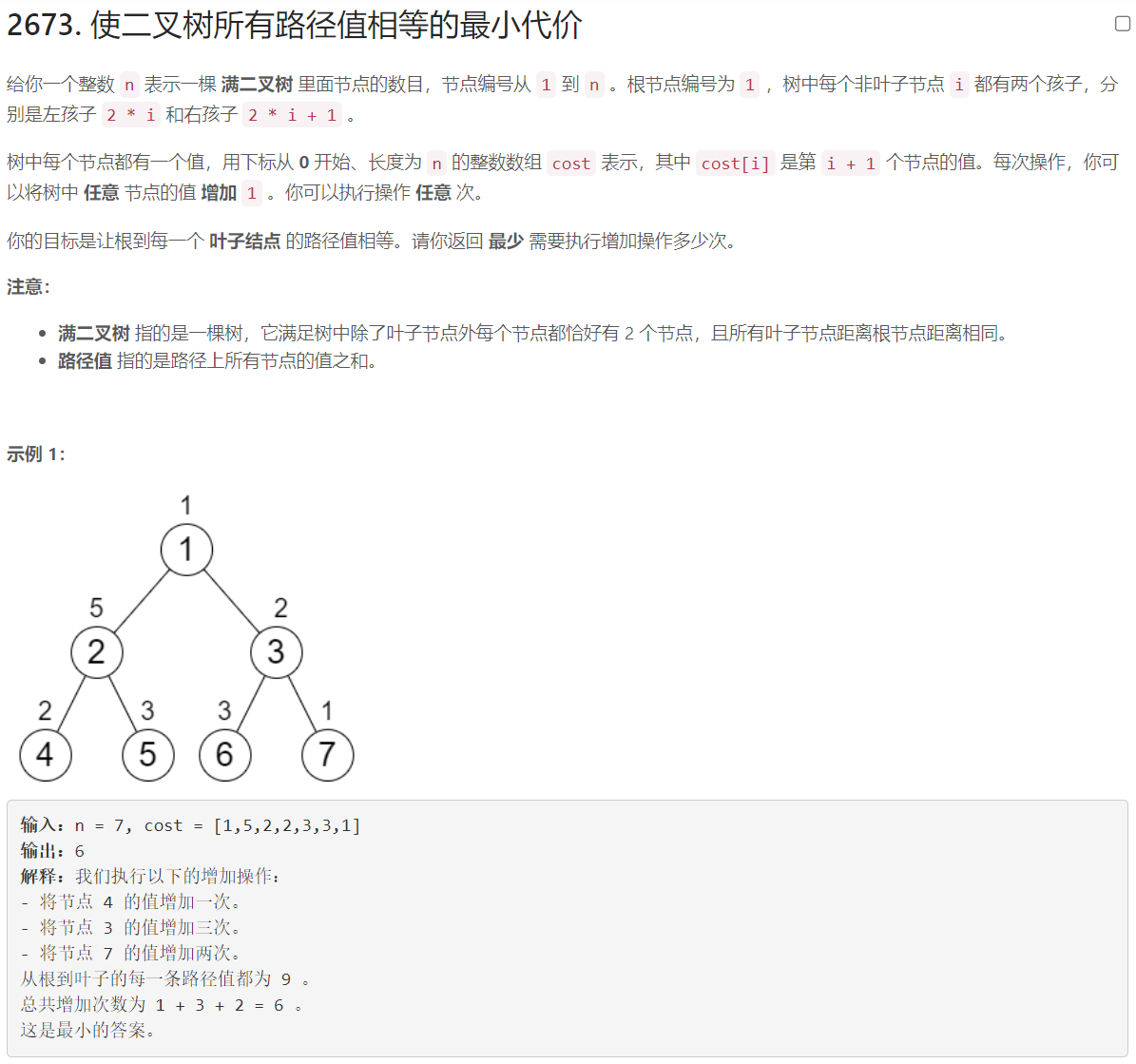
使二叉树所有路径值相等的最小代价

方法一:树上贪心

1
2
3
4
5
6
7
8
9
10
class Solution {
public int minIncrements(int n, int[] cost) {
int res = 0;
for (int i = n / 2; i > 0; --i) {
res += Math.abs(cost[2 * i - 1] - cost[2 * i]);
cost[i - 1] += Math.max(cost[2 * i - 1], cost[2 * i]);
}
return res;
}
}

lcp344
https://leopol1d.github.io/2023/07/20/lcp344/
作者
Leopold
发布于
2023年7月20日
许可协议