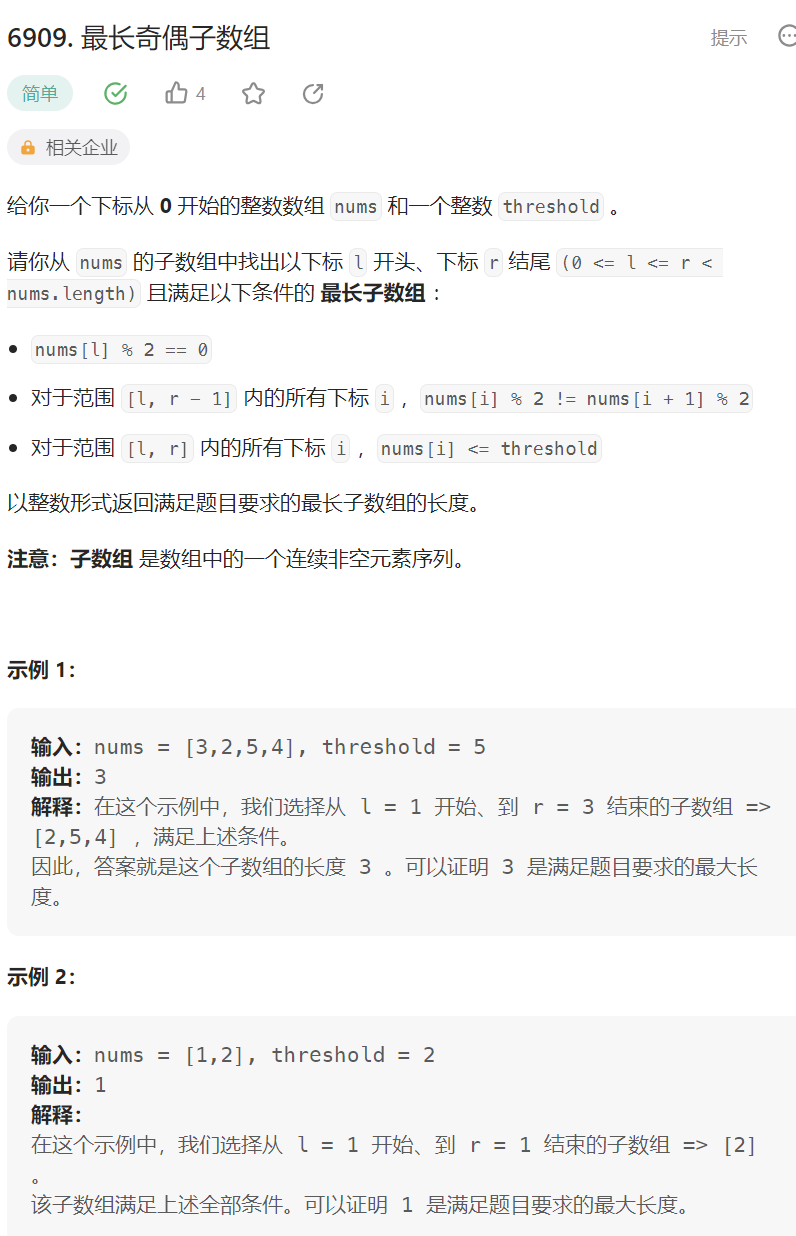
方法一:暴力枚举
1
2
3
4
5
6
7
8
9
10
11
12
13
14
15
16
17
18
19
20
21
22
23
24
25
26
27
28
29
30
31
32
33
class Solution {public int longestAlternatingSubarray (int [] nums, int threshhold) {int n = nums.length;int res = 0 ;for (int i = 0 ; i < n; ++i) {if (nums[i] % 2 != 0 || nums[i] > threshhold)continue ;int len = 1 , pre = 0 ;for (int j = i + 1 ; j < n; ++j) {if (pre == 0 ) {if (nums[j] % 2 == 1 && nums[j] <= threshhold) {1 ;else {break ;else { if (nums[j] % 2 == 0 && nums[j] <= threshhold) {0 ;else {break ;return res;
方法二:一轮遍历
1
2
3
4
5
6
7
8
9
10
11
12
13
14
15
16
17
18
class Solution {public int longestAlternatingSubarray (int [] nums, int threshold) {int res = 0 ;for (int i = 0 ; i < nums.length; ++i) {if (nums[i] % 2 == 0 && nums[i] <= threshold) {int pre = nums[i] % 2 , j = i + 1 ;for (; j < nums.length; ++j) {if (nums[j] % 2 != pre && nums[j] <= threshold)2 ;else break ;return res;
方法一:埃氏筛
静态代码块: 静态代码块定义在类中方法外, 静态代码块在非静态代码块之前执行(静态代码块—>非静态代码块—>构造方法)。 该类不管创建多少对象,静态代码块只执行一次.
1
2
3
4
5
6
7
8
9
10
11
12
13
14
15
16
17
18
19
20
21
22
23
24
25
26
27
28
class Solution {private final static int MAX = (int ) 1e6 ;private final static boolean [] isPrime = new boolean [MAX + 1 ];private final static int [] prime = new int [MAX];static {int index = 0 ;for (int i = 2 ; i <= MAX; ++i) {if (!isPrime[i]) {if (i < MAX / i)for (int j = i * i; j < MAX; j += i)true ;public List<List<Integer>> findPrimePairs (int n) {new LinkedList <>();for (int x : prime) {int y = n - x;if (y < x)break ;if (!isPrime[y])return res;
埃氏筛
1
2
3
4
5
6
7
8
9
10
11
12
13
14
15
16
class Solution {public int countPrimes (int n) {boolean [] isPrime = new boolean [n];true );int res = 0 ;for (int i = 2 ; i < n; ++i) {if (isPrime[i]) {if ((long ) i * i < n)for (int j = i * i; j < n; j += i)false ;return res;
滑动窗口
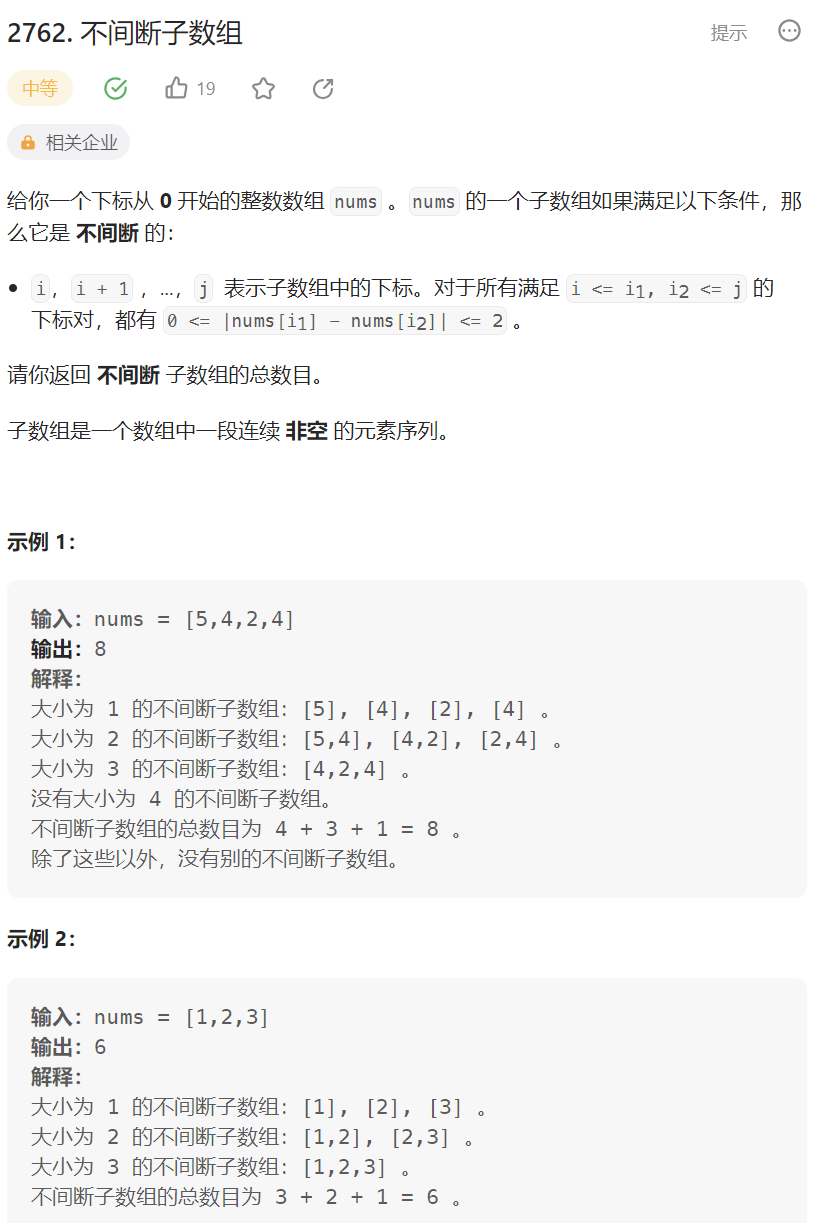
map.lastKey() - map.firstKey()得到最大值与最小值的差
res += (long) i - j + 1十分巧妙,举例nums=[5, 4, 2, 4]
i = 0, [5], res += 1 = 1
i = 1,[5, 4], [4], res +=2 = 3
i = 2, [4, 2], [2] ,res += 2 = 5
i = 3, [4,2, 4], [4], [2,4], res += 3 = 8
1
2
3
4
5
6
7
8
9
10
11
12
13
14
15
16
17
18
class Solution {public long continuousSubarrays (int [] nums) {new TreeMap <>();int n = nums.length;long res = 0 ;for (int i = 0 , j = 0 ; i < n; ++i) {0 ) + 1 );while (j <= i && map.lastKey() - map.firstKey() > 2 ) {0 ) - 1 );if (map.get(nums[j]) == 0 )long ) i - j + 1 ;return res;
1
2
3
4
5
6
7
8
9
10
11
12
13
14
15
16
17
class Solution {public int longestSubarray (int [] nums, int limit) {new TreeMap <>();int n = nums.length, res = 0 ; for (int i = 0 , j = 0 ; i < n; ++i) {0 ) + 1 );while (j <= i && map.lastKey() - map.firstKey() > limit) {1 );if (map.get(nums[j]) == 0 )1 );return res;
1
2
3
4
5
6
7
8
9
10
11
12
13
14
15
16
17
18
19
20
21
22
23
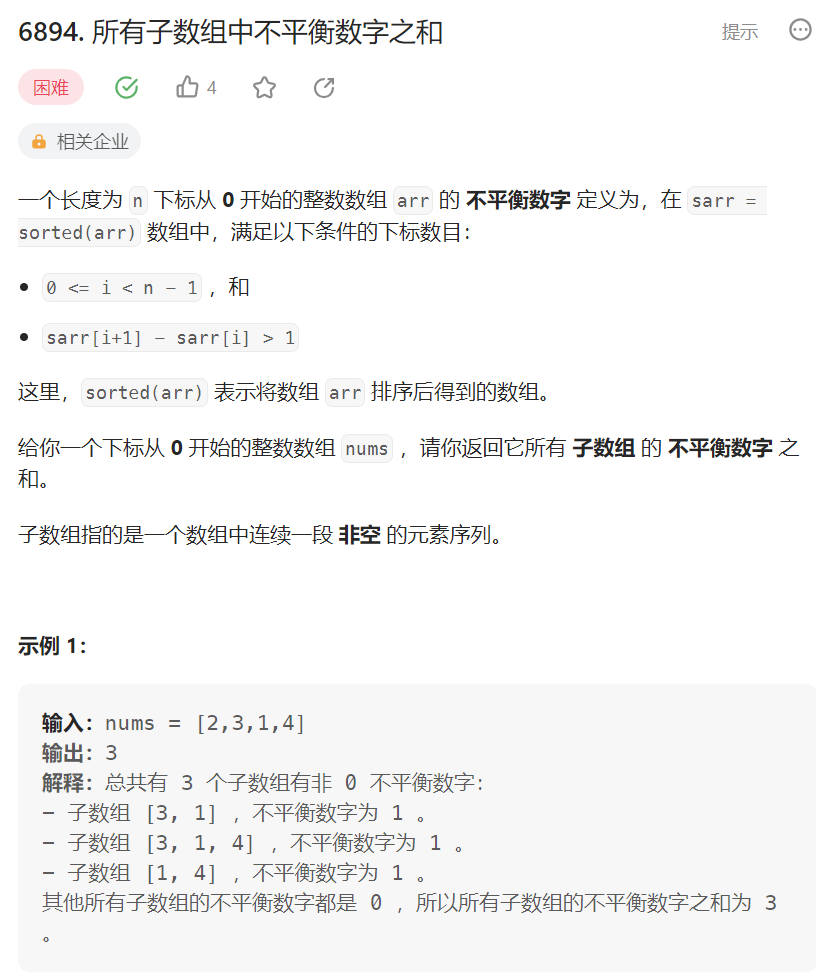
class Solution {public int sumImbalanceNumbers (int [] nums) {int res = 0 , n = nums.length;boolean [] visited = new boolean [n + 2 ];for (int i = 0 ; i < n; ++i) {false );int count = 0 ;true ;for (int j = i + 1 ; j < n; ++j) {if (!visited[nums[j]]) {if (visited[nums[j] - 1 ])if (visited[nums[j] + 1 ])true ;return res;