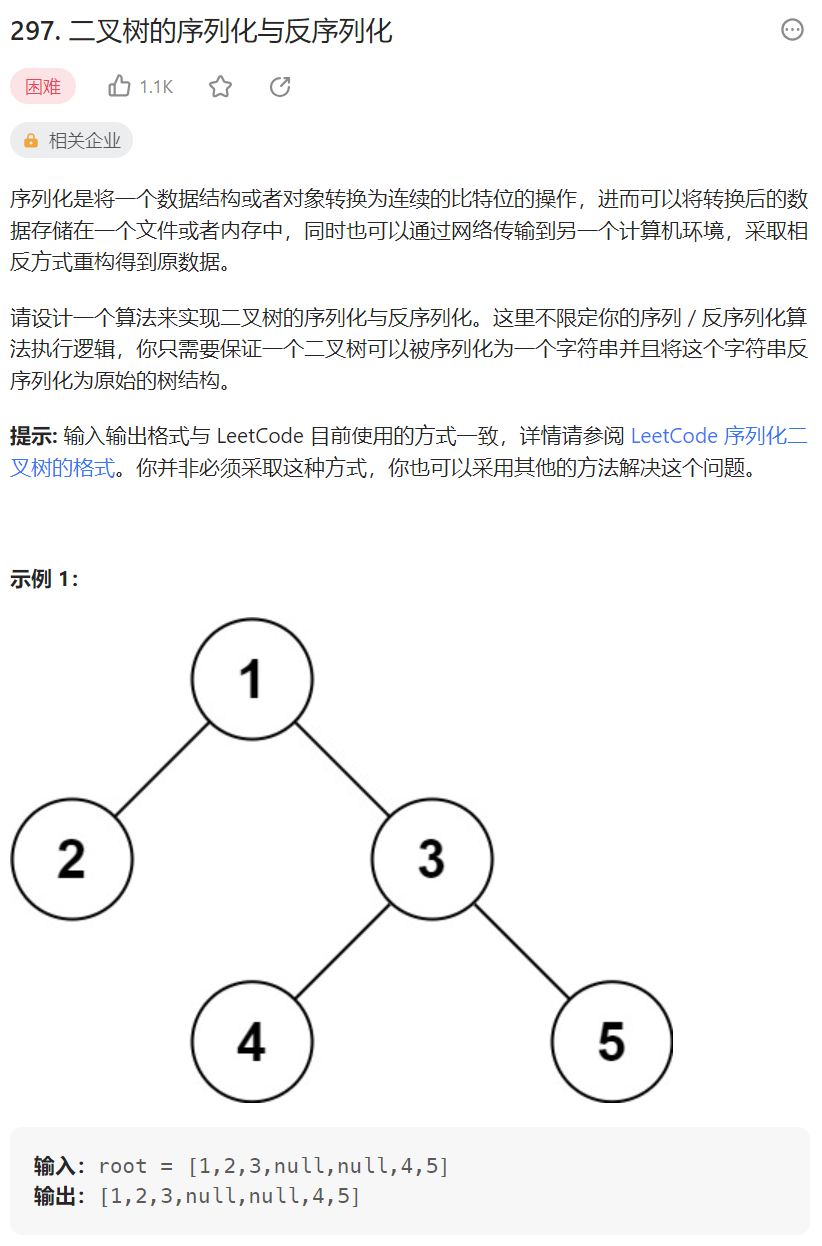
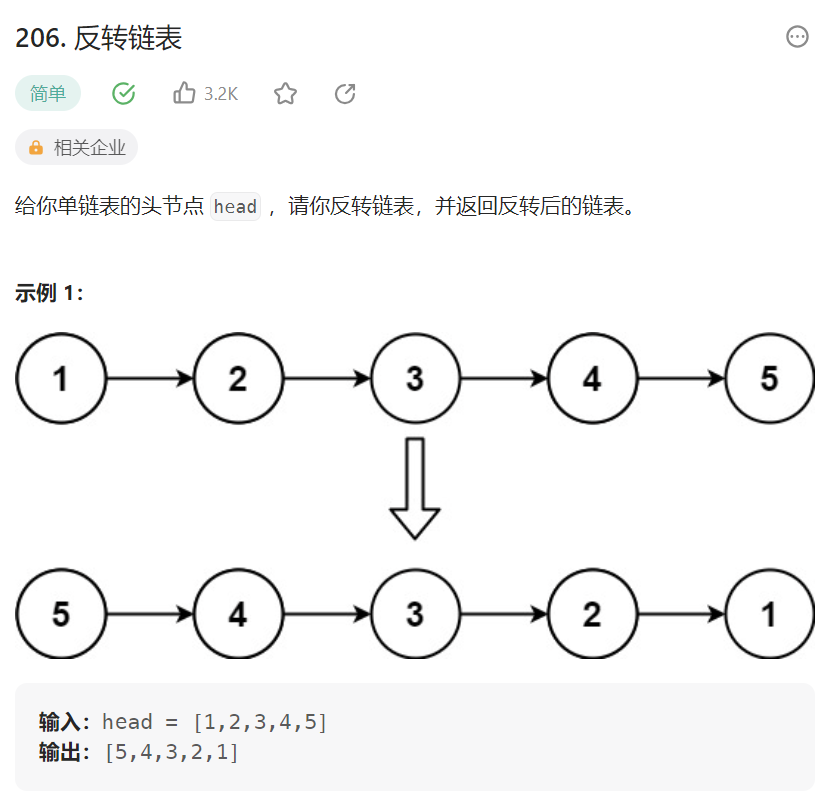
方法一:DFS
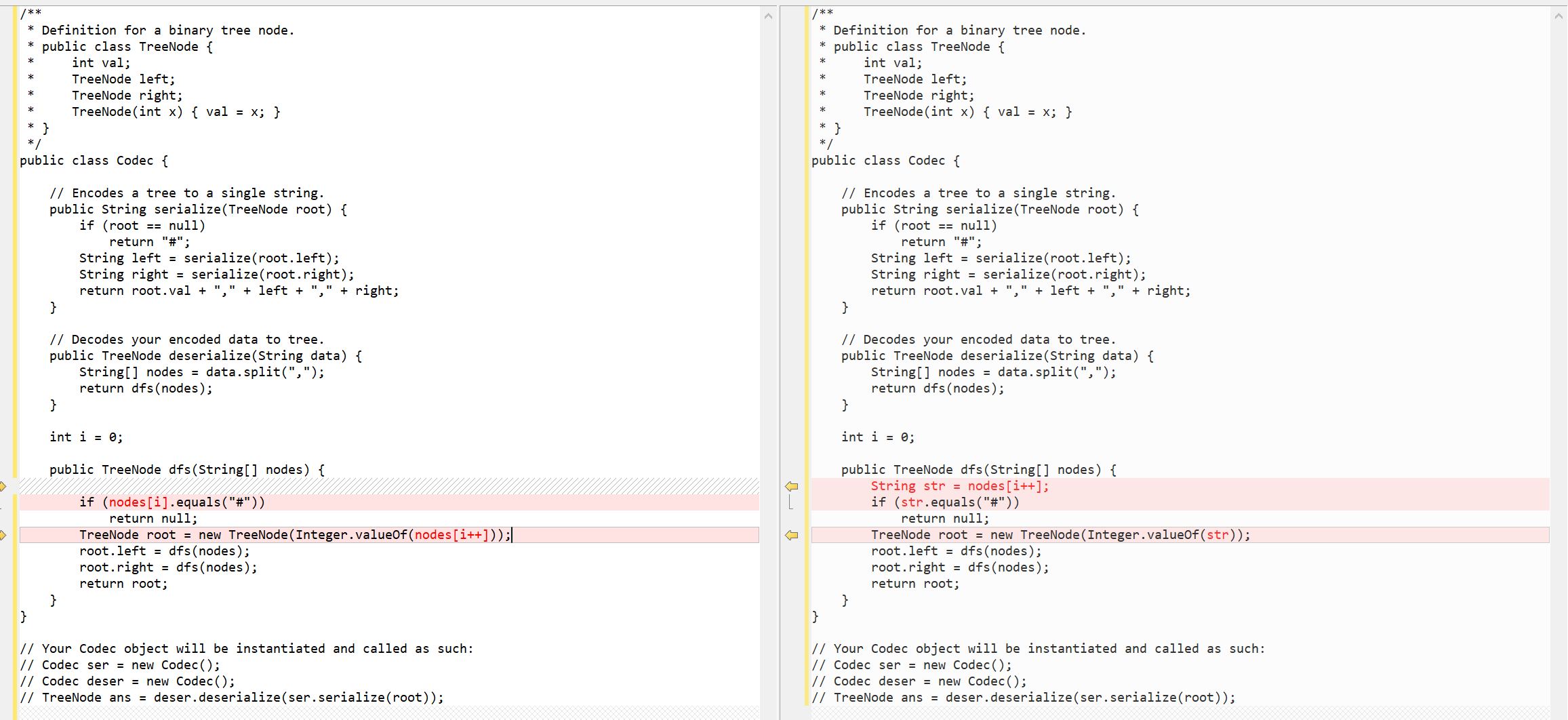
1 2 3 4 5 6 7 8 9 10 11 12 13 14 15 16 17 18 19 20 21 22 23 24 25 26 27 28 29 30 31 32 33 34 35 36 37 38 39 40 41 42 43 public class Codec {public String serialize (TreeNode root) {if (root == null )return "#" ;String left = serialize(root.left);String right = serialize(root.right);return root.val + "," + left + "," + right;public TreeNode deserialize (String data) {"," );return dfs(nodes);int i = 0 ;public TreeNode dfs (String[] nodes) {String str = nodes[i++];if (str.equals("#" ))return null ;TreeNode root = new TreeNode (Integer.valueOf(str));return root;
为什么左边的代码不行,因为如何nodes[i]是节点,i没有自增!
方法一:滑动窗口 set
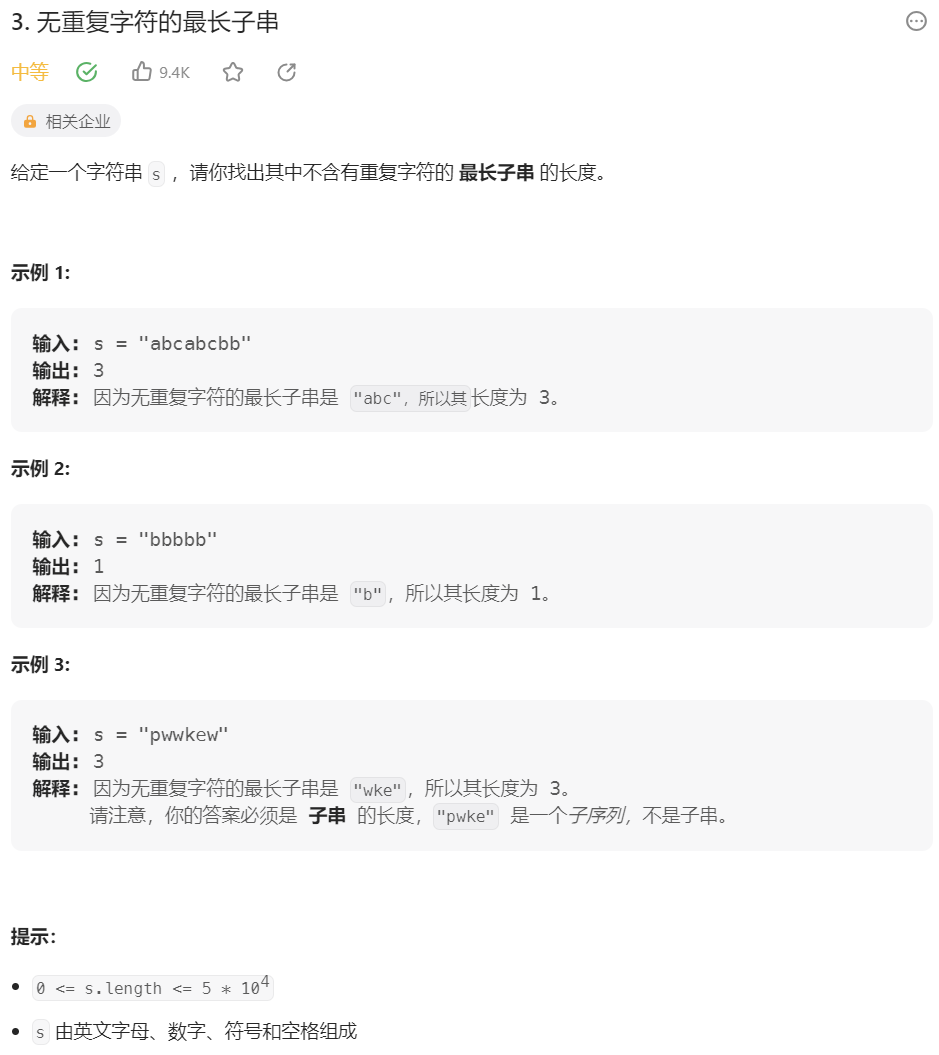
用HashSet判断重复,并将左区间滑动到没有重复元素为止
1
2
3
4
5
6
7
8
9
10
11
12
13
14
15
16
17
18
19
20
class Solution {public int lengthOfLongestSubstring (String s) {int length = 0 ;new HashSet <>();for (int i = 0 , left = 0 ; i < s.length(); ++i) {char ch = s.charAt(i);if (set.contains(ch)) {while (left < i) {if (!set.contains(ch))break ;1 );return length;
方法二:滑动窗口 map
用HashMap存储遍历的字符以及其下标,当出现重复字符,将left赋值为Math.max(left, map.get(ch) + 1)
1
2
3
4
5
6
7
8
9
10
11
12
13
14
class Solution {public int lengthOfLongestSubstring (String s) {int max = 0 , left = 0 , n = s.length();new HashMap <>();for (int i = 0 ; i < n; ++i) {char ch = s.charAt(i);if (map.containsKey(ch)) 1 );1 );return max;
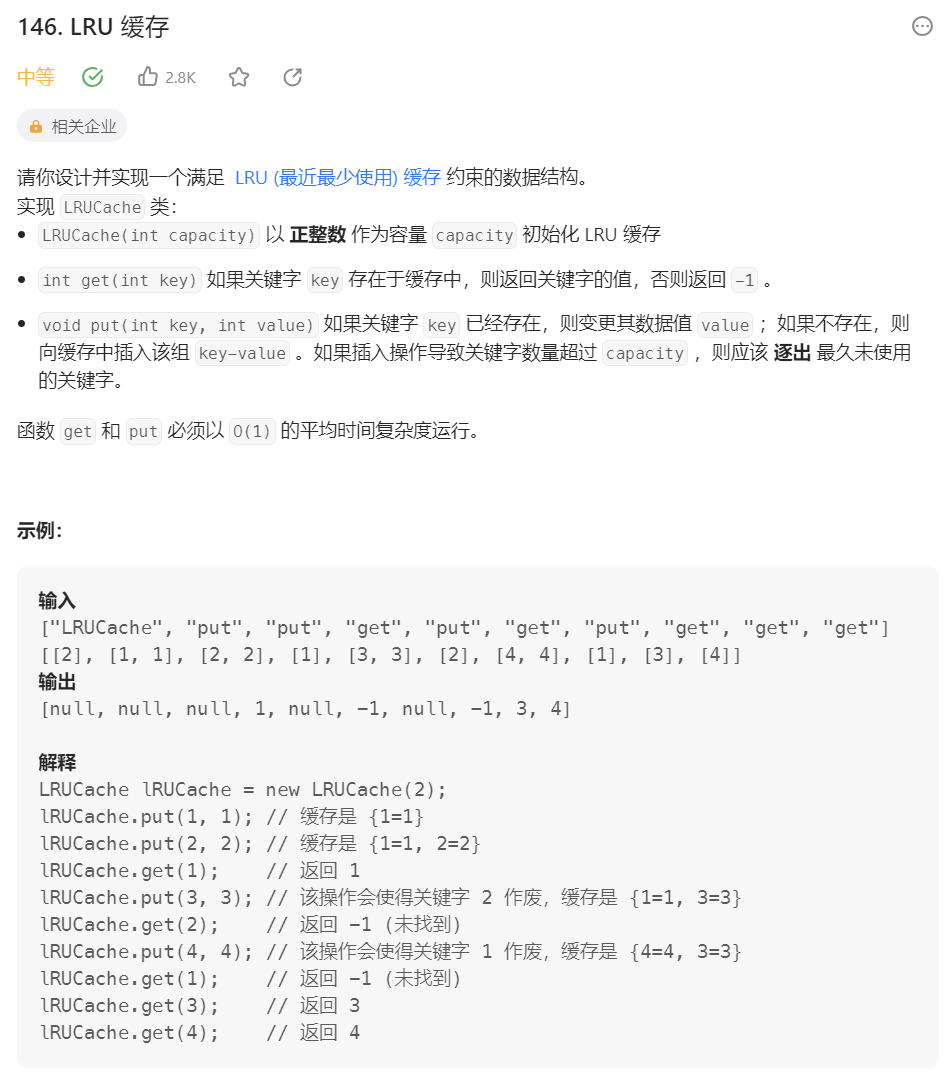
方法一:HashMap + ListNode
1
2
3
4
5
6
7
8
9
10
11
12
13
14
15
16
17
18
19
20
21
22
23
24
25
26
27
28
29
30
31
32
33
34
35
36
37
38
39
40
41
42
43
44
45
46
47
48
49
50
51
52
53
54
55
56
57
58
59
60
61
62
63
64
65
66
67
68
69
70
71
72
73
74
75
76
77
78
79
80
81
82
83
class LRUCache {static class ListNode {int key;int val;public ListNode (int key, int val) {this .key = key;this .val = val;int capacity;public LRUCache (int capacity) {new ListNode (-1 , -1 );new ListNode (-1 , -1 );new HashMap <>();this .capacity = capacity;public int get (int key) {if (!map.containsKey(key))return -1 ;return map.get(key).val;public void put (int key, int value) {if (map.containsKey(key)) {else {if (capacity == map.size()) 1 , true );ListNode node = new ListNode (key, value);public void moveToTail (int key) {false );public void delete (int key, boolean isLast) {if (isLast) {ListNode toBeDelete = head.next;else {ListNode toBeDelete = map.get(key);private void insertIntail (int key) {ListNode node = map.get(key);
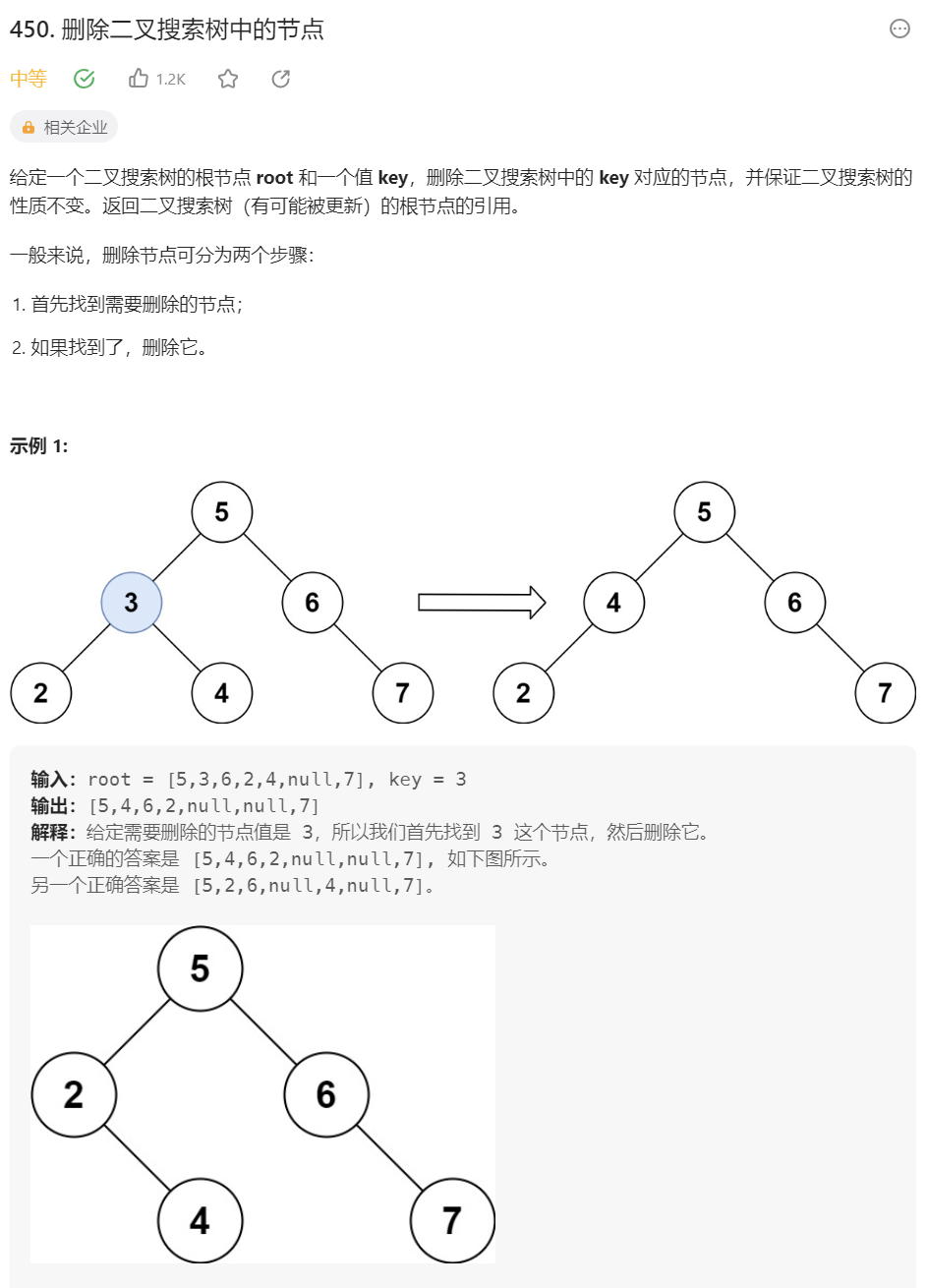
方法一:DFS
1 2 3 4 5 6 7 8 9 10 11 12 13 14 15 16 17 18 19 20 21 22 23 24 25 26 27 28 29 30 31 32 33 34 35 36 37 38 39 40 41 class Solution {public TreeNode deleteNode (TreeNode root, int key) {if (root == null ) return null ;if (root.val > key)else if (root.val < key)else {if (root.left == null && root.right == null )return null ;else if (root.left == null )return root.right;else if (root.right == null )return root.left;else {TreeNode cur = root.right;while (cur.left != null ) return root.right;return root;
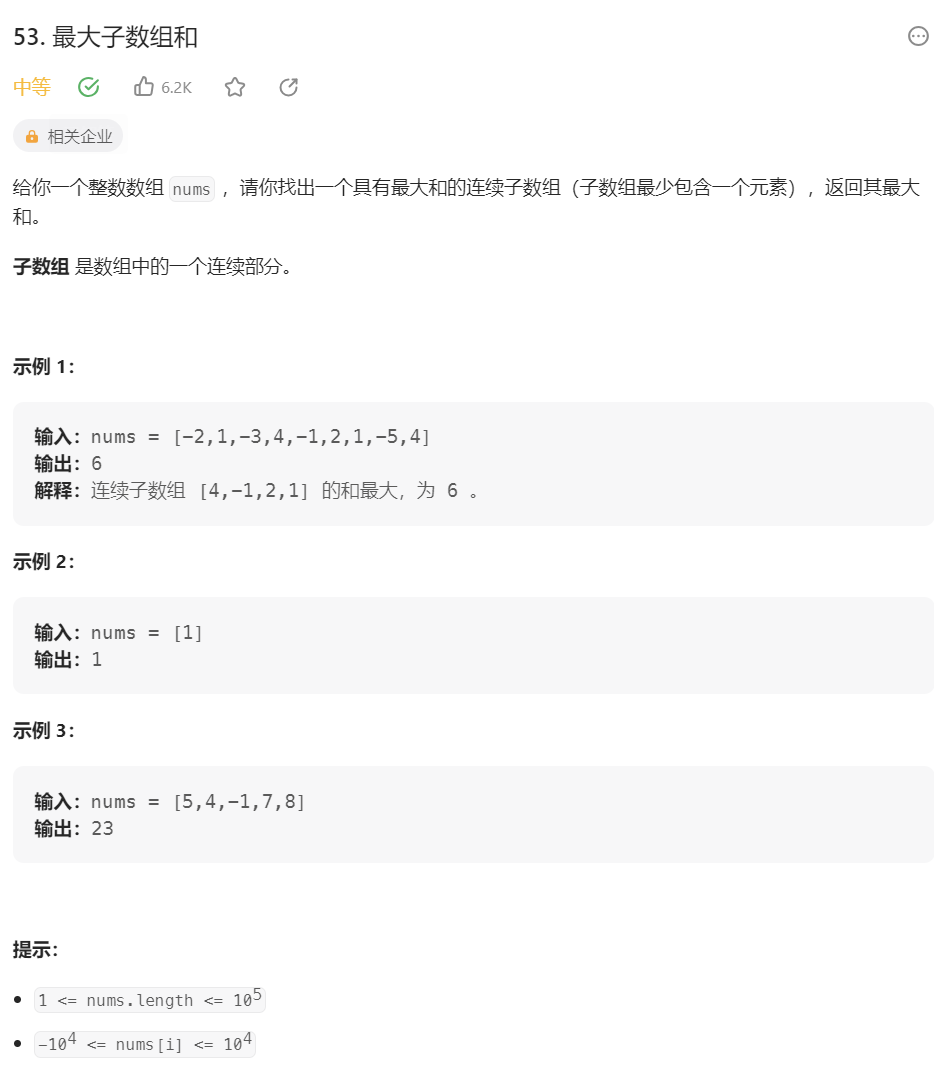
方法一:DP
1
2
3
4
5
6
7
8
9
10
11
12
class Solution {public int maxSubArray (int [] nums) {int n = nums.length, res = nums[0 ];int [] dp = new int [n];0 ] = nums[0 ];for (int i = 1 ; i < n; ++i) {1 ] >= 0 ? dp[i - 1 ] : 0 );return res;
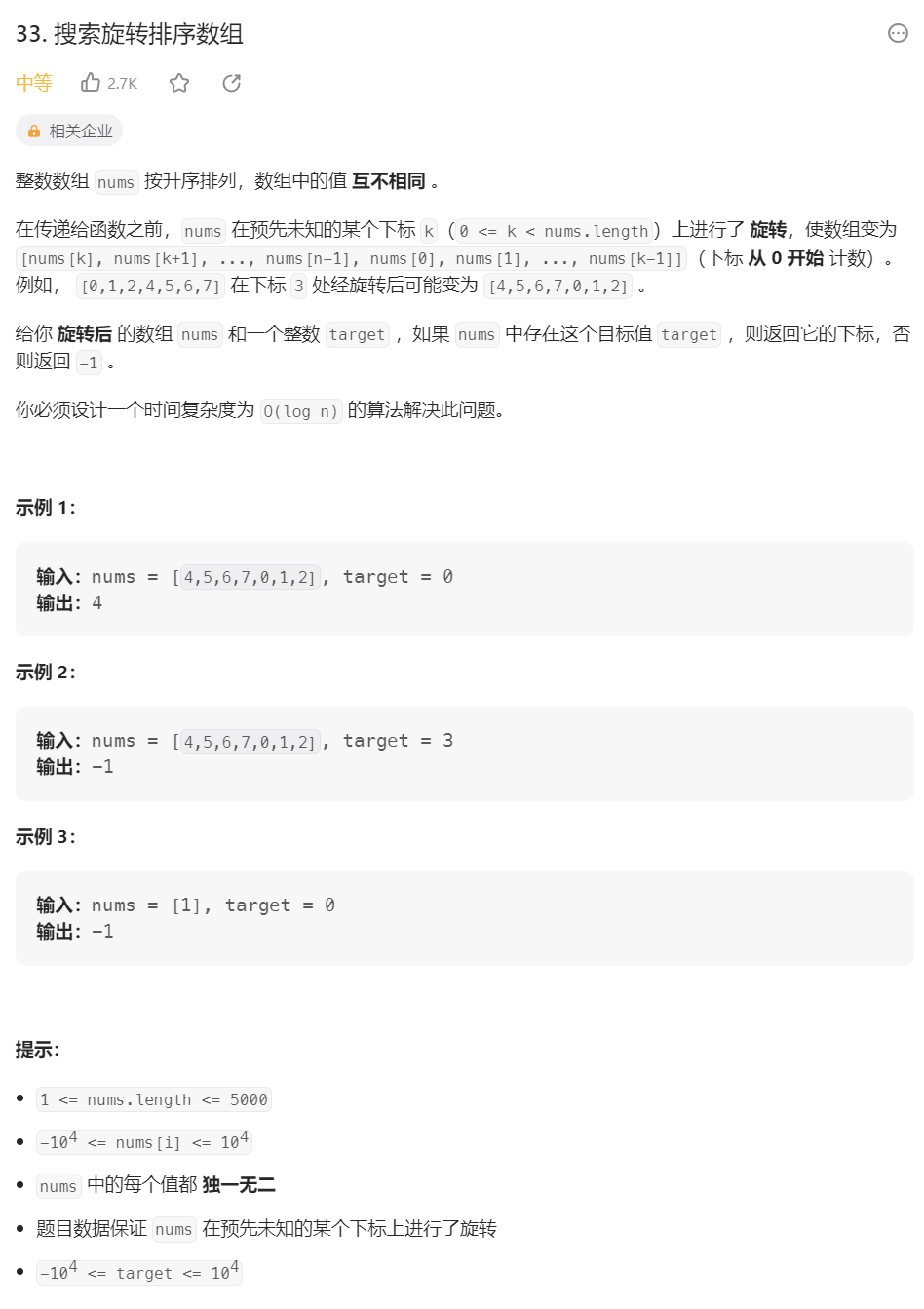
方法一:二分查找
1
2
3
4
5
6
7
8
9
10
11
12
13
14
15
16
17
18
19
20
21
22
23
24
25
26
27
28
29
30
31
32
33
34
35
class Solution {public int search (int [] nums, int target) {int n = nums.length, targetIdx = -1 ;int left = 0 , right = n - 1 ;while (left <= right) {int mid = (left + right) >> 1 ;if (nums[mid] <= nums[n - 1 ])1 ;else 1 ;if (target > nums[n - 1 ])0 , left - 1 , target);else 1 , target);return targetIdx;public int bisearch (int [] nums, int left, int right, int target) {while (left <= right) {int mid = (left + right) >> 1 ;if (nums[mid] < target)1 ;else if (nums[mid] == target)return mid;else 1 ;return -1 ;
题解
方法一:划分数组
1
2
3
4
5
6
7
8
9
10
11
12
13
14
15
16
17
18
19
20
21
22
23
24
25
26
27
28
29
30
class Solution {public double findMedianSortedArrays (int [] nums1, int [] nums2) {if (nums1.length > nums2.length)return findMedianSortedArrays(nums2, nums1);int m = nums1.length, n = nums2.length;int median1 = 0 , median2 = 0 ; int left = 0 , right = m; while (left <= right) {int i = (left + right) / 2 , j = (m + n + 1 ) / 2 - i;int nums_i = i == m ? Integer.MAX_VALUE : nums1[i];int nums_im1 = i == 0 ? Integer.MIN_VALUE : nums1[i - 1 ];int nums_j = j == n ? Integer.MAX_VALUE : nums2[j];int nums_jm1 = j == 0 ? Integer.MIN_VALUE : nums2[j - 1 ];if (nums_im1 <= nums_j) {1 ;else {1 ;return (m + n) % 2 == 0 ? (median1 + median2) / 2.0 : median1;
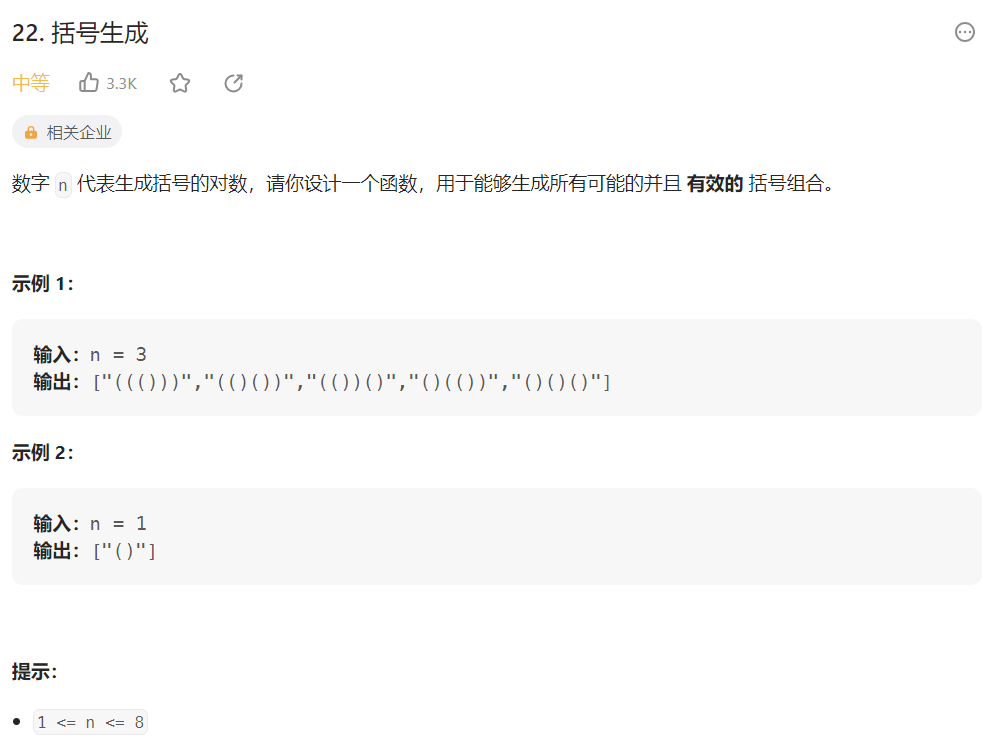
方法一:回溯
1
2
3
4
5
6
7
8
9
10
11
12
13
14
15
16
17
18
19
20
21
22
23
24
25
26
27
28
class Solution {public List<String> generateParenthesis (int n) {this .n = n;0 , n, n);return res;private void dfs (int index, int left, int right) {if (index == 2 * n) {return ;if (left > 0 ) {'(' );1 , left - 1 , right);1 );if (right > left) {')' );1 , left, right - 1 );1 );new LinkedList <>();StringBuilder sb = new StringBuilder ();int n;
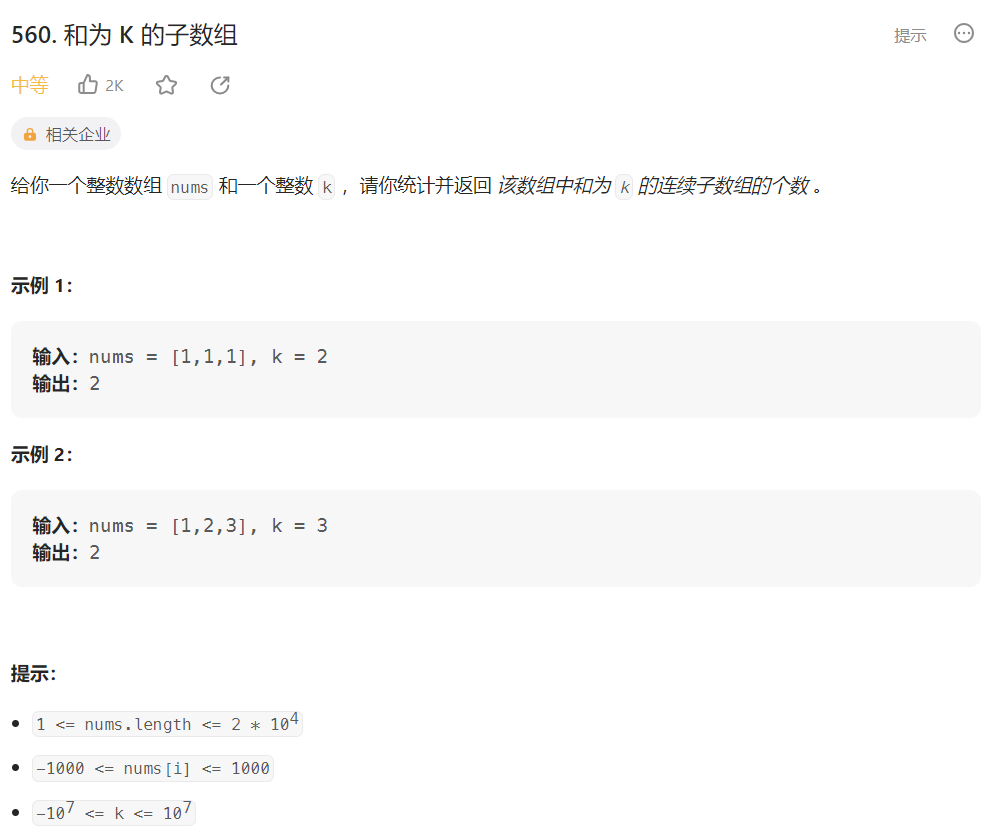
方法一:前缀和 + HashMap
题解
可以用这种方法做链接中的题
map.put(0, 1)是为了让第一组满足的子数组map.containsKey(pre - k) = 1
1
2
3
4
5
6
7
8
9
10
11
12
13
14
class Solution {public int subarraySum (int [] nums, int k) {int pre = 0 , count = 0 ;new HashMap <>();0 , 1 );for (int i = 0 ; i < nums.length; ++i) {if (map.containsKey(pre - k)) 0 ) + 1 );return count;
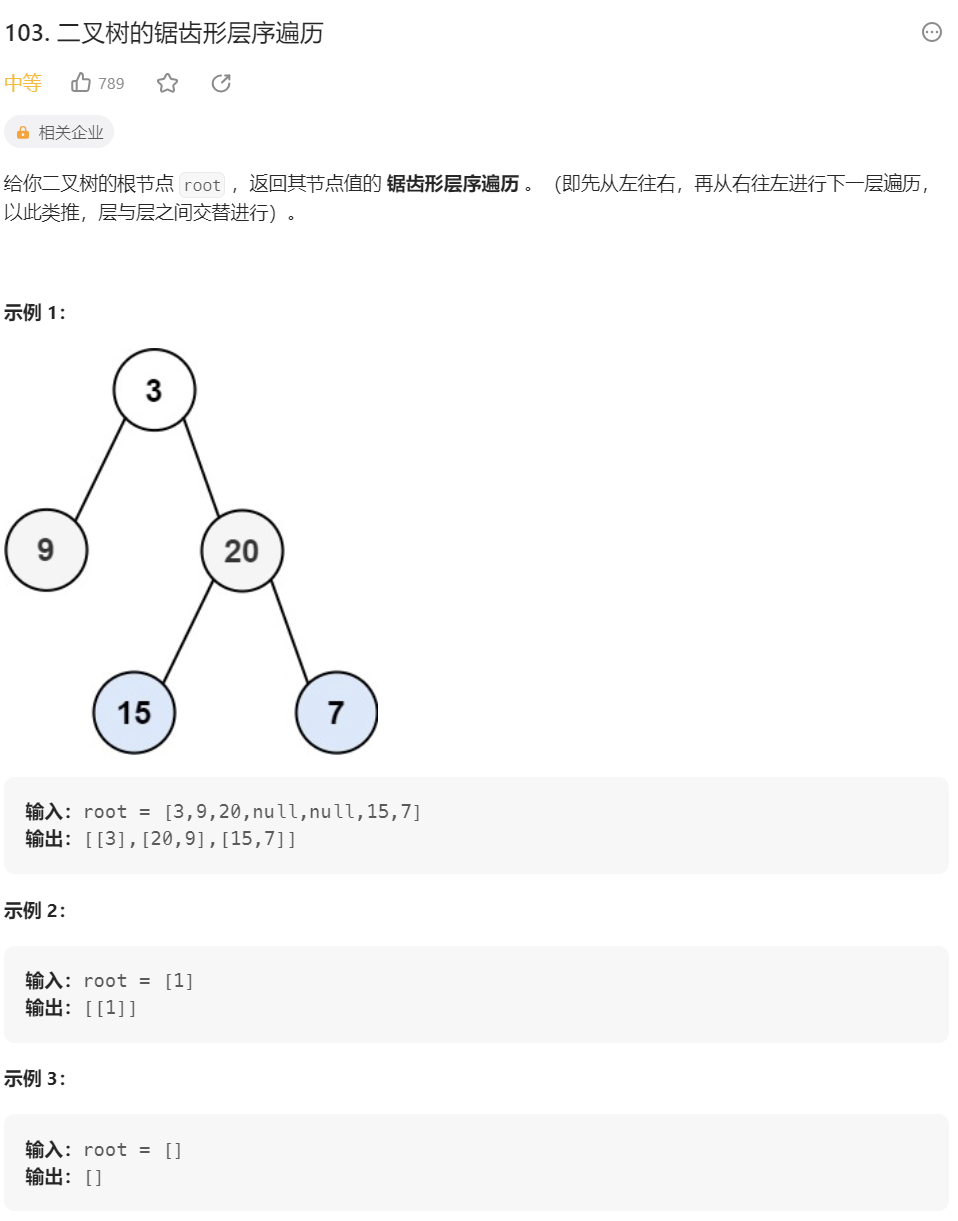
方法一:双队列
1 2 3 4 5 6 7 8 9 10 11 12 13 14 15 16 17 18 19 20 21 22 23 24 25 26 27 28 29 30 31 32 33 34 35 36 37 38 39 40 41 42 43 44 45 46 47 48 49 50 51 52 class Solution {public List<List<Integer>> zigzagLevelOrder (TreeNode root) {if (root == null ) return new LinkedList <>();boolean nextRight = true ;new LinkedList <>(), temp = new LinkedList <>();new LinkedList ();while (!queue.isEmpty()) {int size = queue.size();new LinkedList ();for (int i = 0 ; i < size; ++i) {if (nextRight) {TreeNode cur = queue.pollFirst();if (cur.left != null )if (cur.right != null )else {TreeNode cur = queue.pollLast();if (cur.right != null )if (cur.left != null )new LinkedList <>();return res;
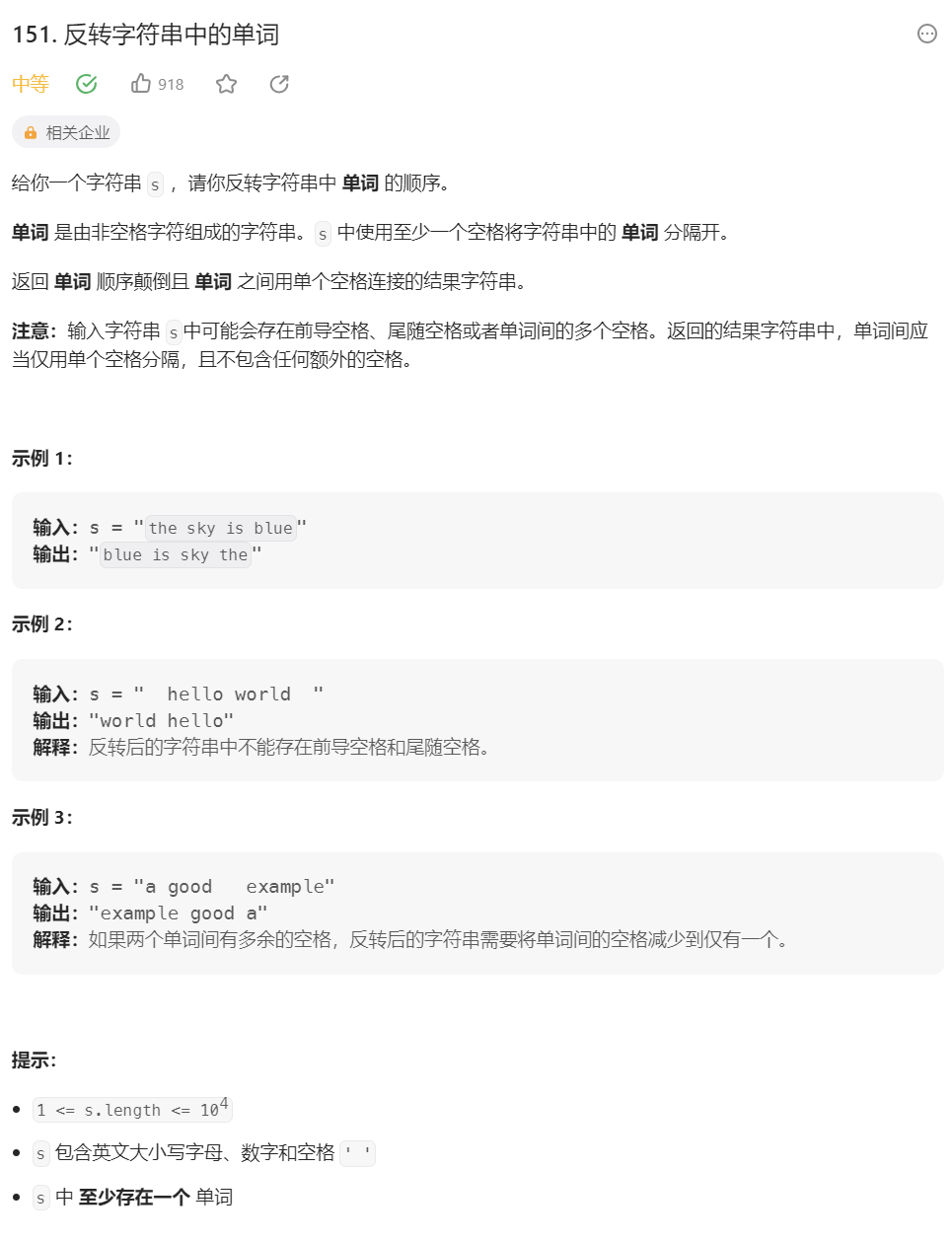
方法一:双端队列
用栈实现不是逆序的
1
2
3
4
5
6
7
8
9
10
11
12
13
14
15
16
17
18
19
20
21
22
23
class Solution {public String reverseWords (String s) {new LinkedList <>();StringBuilder sb = new StringBuilder ();int left = 0 , right = s.length() - 1 ;while (s.charAt(left) == ' ' )while (s.charAt(right) == ' ' )while (left <= right) {char ch = s.charAt(left++);if (ch != ' ' )else if (ch == ' ' && sb.length() > 0 ) {0 );return String.join(" " , queue);
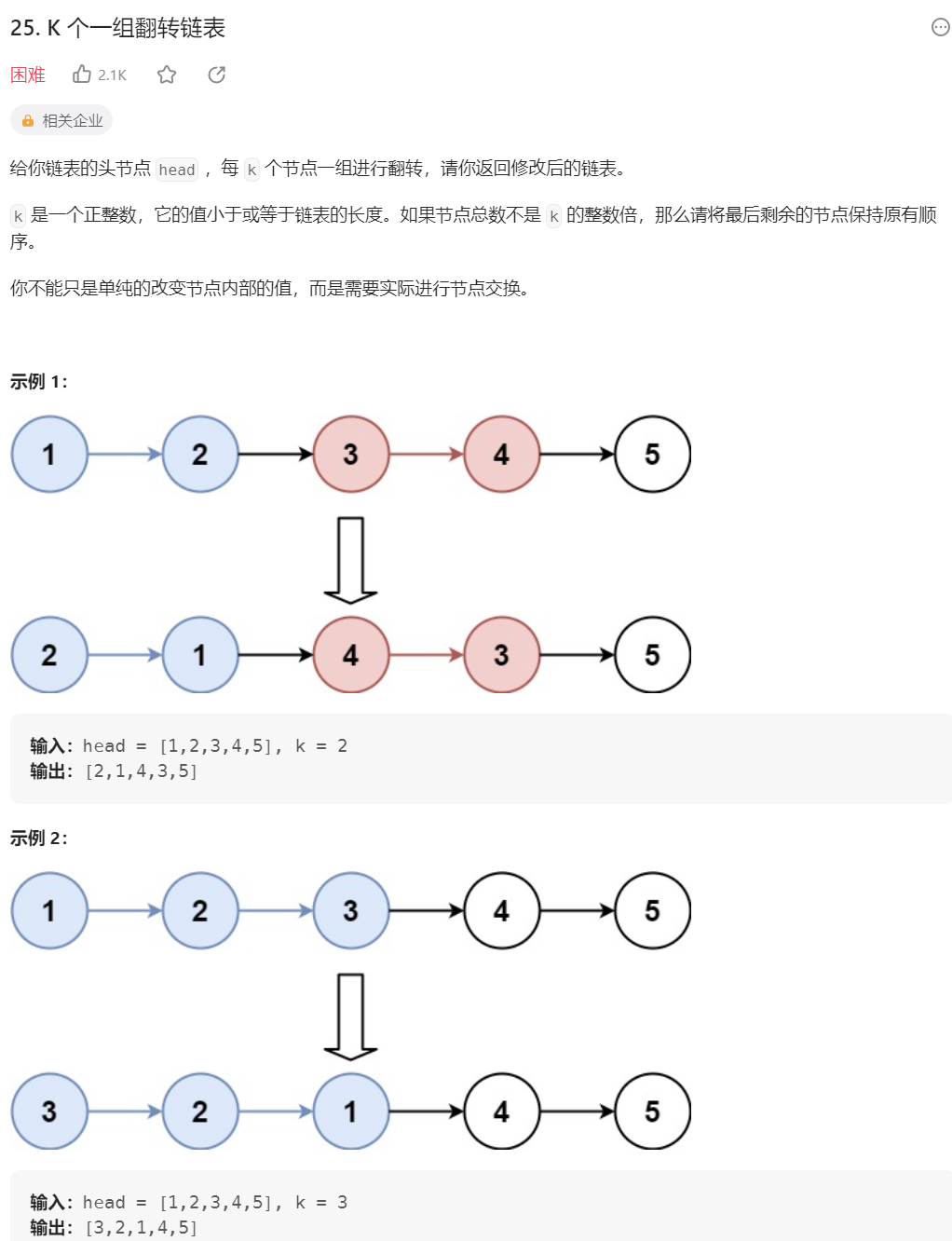
方法一:模拟
多debug
使用outOfBound判断最后一部分节点的数量是否少于k,如果少于k就break
1 2 3 4 5 6 7 8 9 10 11 12 13 14 15 16 17 18 19 20 21 22 23 24 25 26 27 28 29 30 31 32 33 34 35 36 37 38 39 40 41 42 43 44 45 46 47 48 49 50 class Solution {public ListNode reverseKGroup (ListNode head, int k) {if (k == 1 )return head;ListNode dummyHead = new ListNode (-1 , head);ListNode pre = dummyHead, next = dummyHead, cur = head, start = dummyHead;while (cur != null && cur.next != null ) {boolean outOfBound = false ;for (int i = 0 ; i < k - 1 ; ++i) {if (cur.next == null ) {true ;break ;if (outOfBound)break ;null ;return dummyHead.next;private ListNode reverse (ListNode cur) {ListNode pre = null , next;while (cur != null ) {return pre;
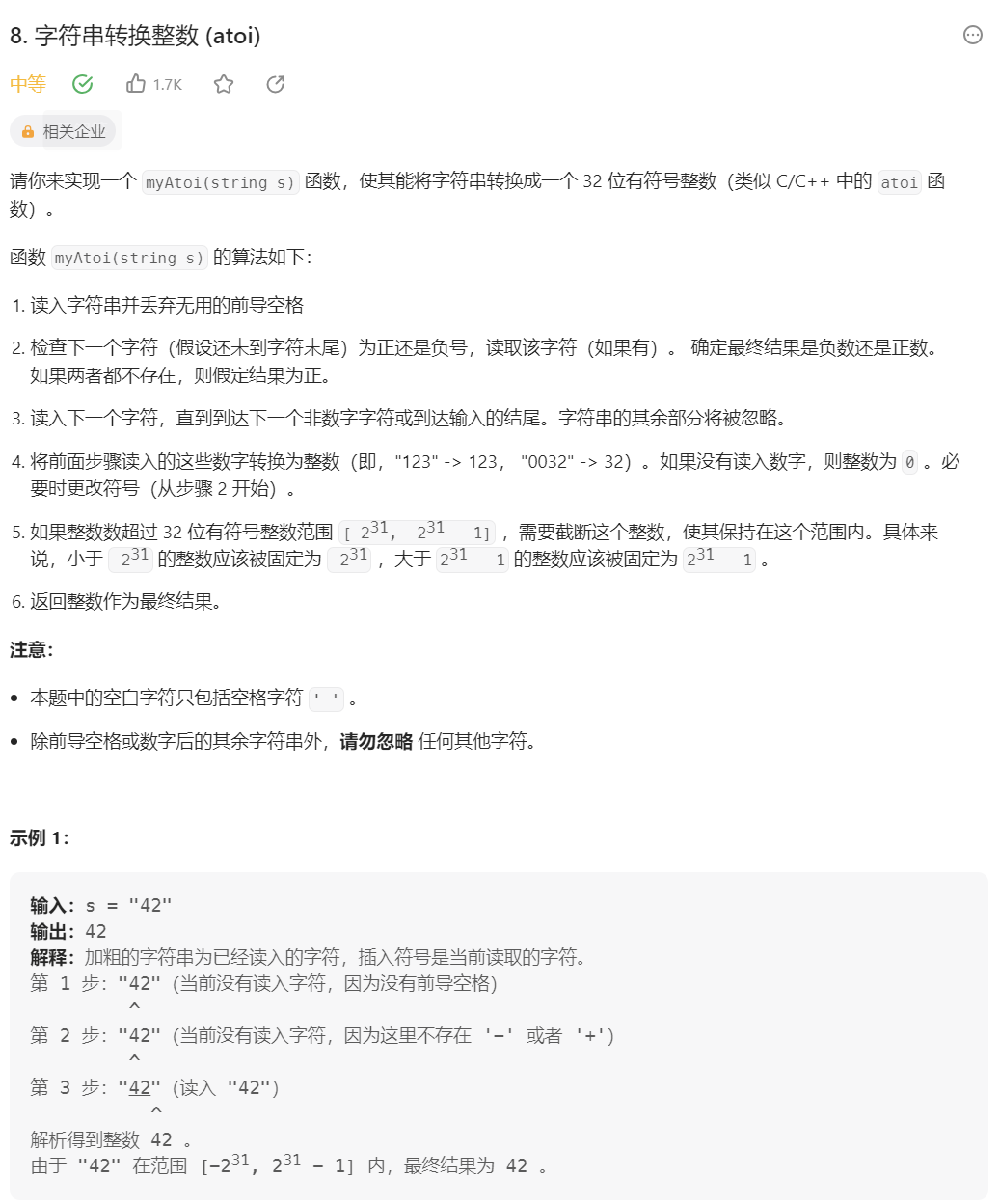
方法一:模拟
判断是否溢出
其中Integer.MAX_VALUE / 10 == res && val > 7,如果是正数val > 7溢出;如果是负数val > 8才溢出,不过等于8时,结果恰好是Integer.MIN_VALUE
[-2147483648,2147483647]
1
2
if (Integer.MAX_VALUE / 10 < res || (Integer.MAX_VALUE / 10 == res && val > 7 ))return positive ? Integer.MAX_VALUE : Integer.MIN_VALUE;
代码
1
2
3
4
5
6
7
8
9
10
11
12
13
14
15
16
17
18
19
20
21
22
23
24
25
26
27
28
29
30
31
32
33
34
35
36
37
38
39
40
class Solution {public int myAtoi (String s) {int left = 0 , n = s.length();if (n == 0 )return 0 ;while (left < n) {if (s.charAt(left) != ' ' )break ;if (left == n)return 0 ;boolean positive = true ;if (!isDigital(s.charAt(left))) {'-' ? false : true ;if (s.charAt(left) == '-' )false ;else if (s.charAt(left) != '+' )return 0 ;int res = 0 ;for (int i = left; i < n; ++i) {char ch = s.charAt(i);if (!isDigital(ch))break ;int val = ch - '0' ;if (Integer.MAX_VALUE / 10 < res || (Integer.MAX_VALUE / 10 == res && val > 7 ))return positive ? Integer.MAX_VALUE : Integer.MIN_VALUE;10 + val;return positive ? res : -res;private boolean isDigital (char ch) {return ch == '0' || ch == '1' || ch == '2' || ch == '3' || ch == '4' || ch == '5' || ch == '6' || ch == '7' || ch == '8' || ch == '9' ;
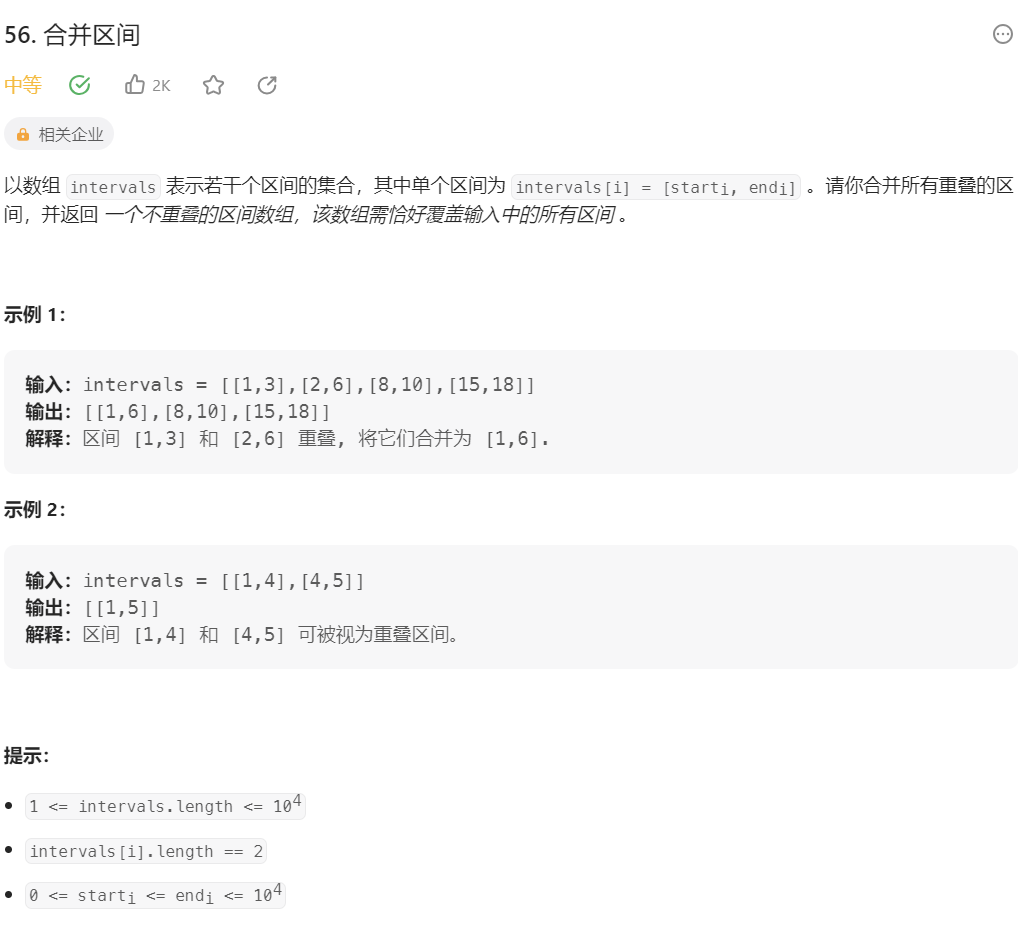
方法一:射气球
1
2
3
4
5
6
7
8
9
10
11
12
13
14
15
16
17
18
19
20
21
22
23
class Solution {public int [][] merge(int [][] intervals) {new Comparator <int []>() {@Override public int compare (int [] o1, int [] o2) {return Integer.compare(o1[0 ], o2[0 ]);int []> list = new LinkedList <>();int left = 0 ;for (int i = 1 ; i < intervals.length; ++i) {if (intervals[left][1 ] >= intervals[i][0 ])1 ] = Math.max(intervals[left][1 ], intervals[i][1 ]);else {1 ] = Math.max(intervals[left][1 ], intervals[intervals.length - 1 ][1 ]);return list.toArray(new int [list.size()][]);
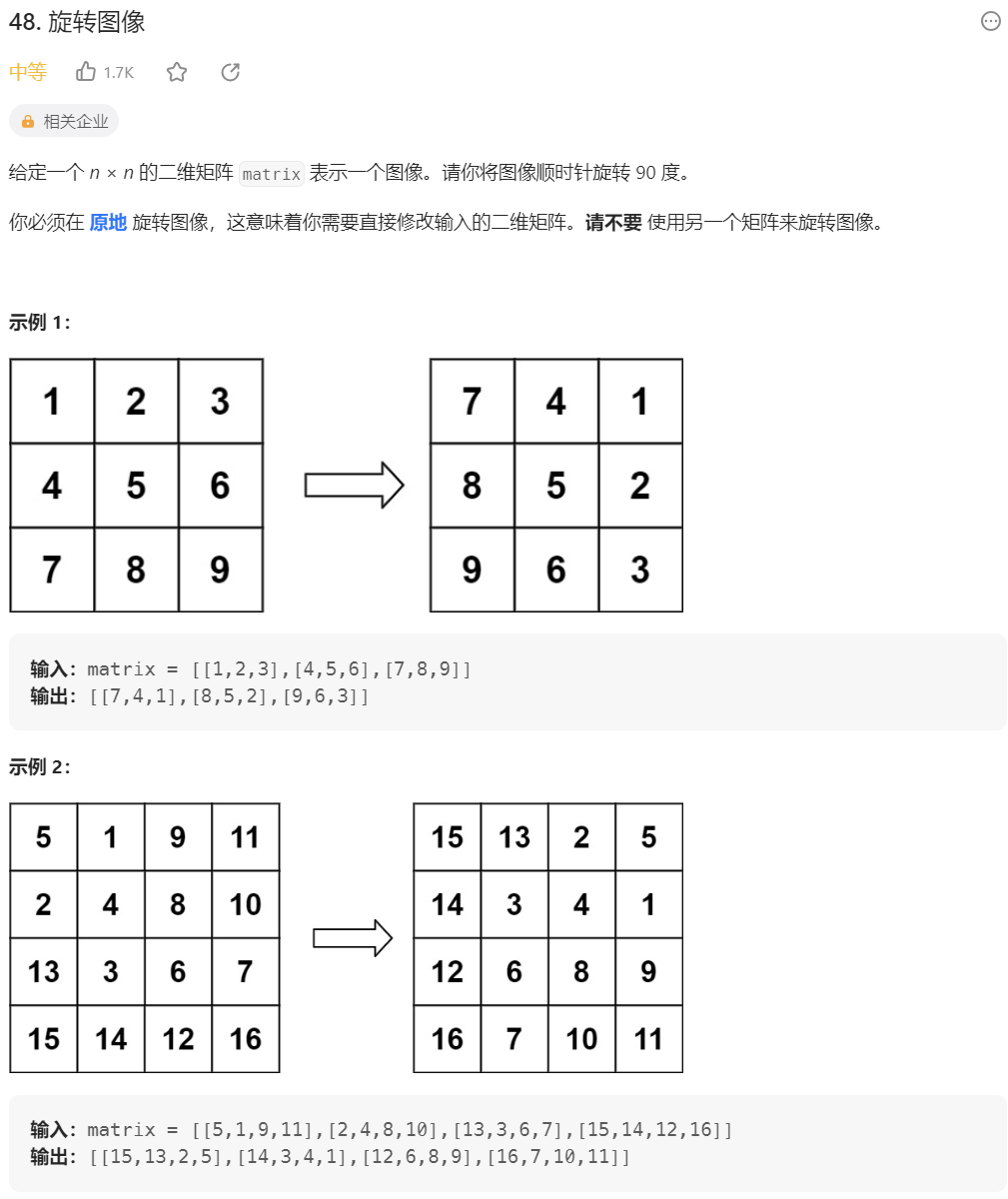
方法一:模拟
别看题解
1
2
3
4
5
6
7
8
9
10
11
12
13
14
15
class Solution {public void rotate (int [][] matrix) {int n = matrix.length;for (int i = 0 ; i < n >> 1 ; ++i) {int len = n - i * 2 ;for (int j = 0 ; j < len - 1 ; ++j) {int temp = matrix[i][i + j];1 ][i];1 ][i] = matrix[n - i - 1 ][n - i - j - 1 ];1 ][n - i - j - 1 ] = matrix[i + j][n - i - 1 ];1 ] = temp;
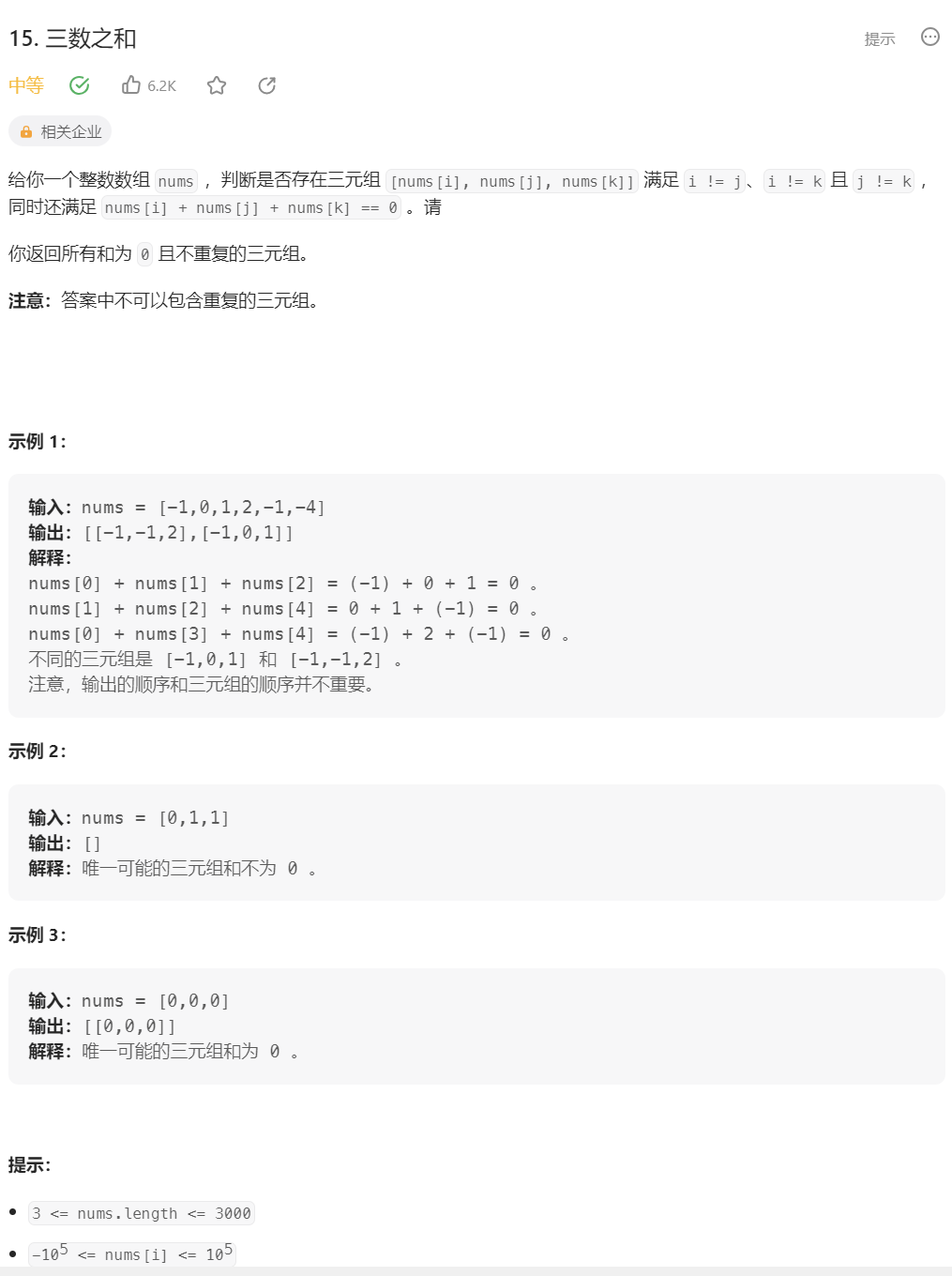
方法一:排序 + 双指针
题解
1
2
3
4
5
6
7
8
9
10
11
12
13
14
15
16
17
18
19
20
21
22
23
24
25
26
27
28
29
30
class Solution {public List<List<Integer>> threeSum (int [] nums) {int n = nums.length;new LinkedList <>();for (int i = 0 ; i < n; ++i) {if (nums[i] > 0 )return res;if (i > 0 && nums[i] == nums[i - 1 ])continue ;int left = i + 1 , right = n - 1 ;while (left < right) {if (nums[i] + nums[left] + nums[right] == 0 ) {while (left < right && nums[left] == nums[left + 1 ])while (left < right && nums[right] == nums[right - 1 ])else if (nums[i] + nums[left] + nums[right] < 0 )else return res;
方法一:HashMap
1
2
3
4
5
6
7
8
9
10
11
12
13
14
15
16
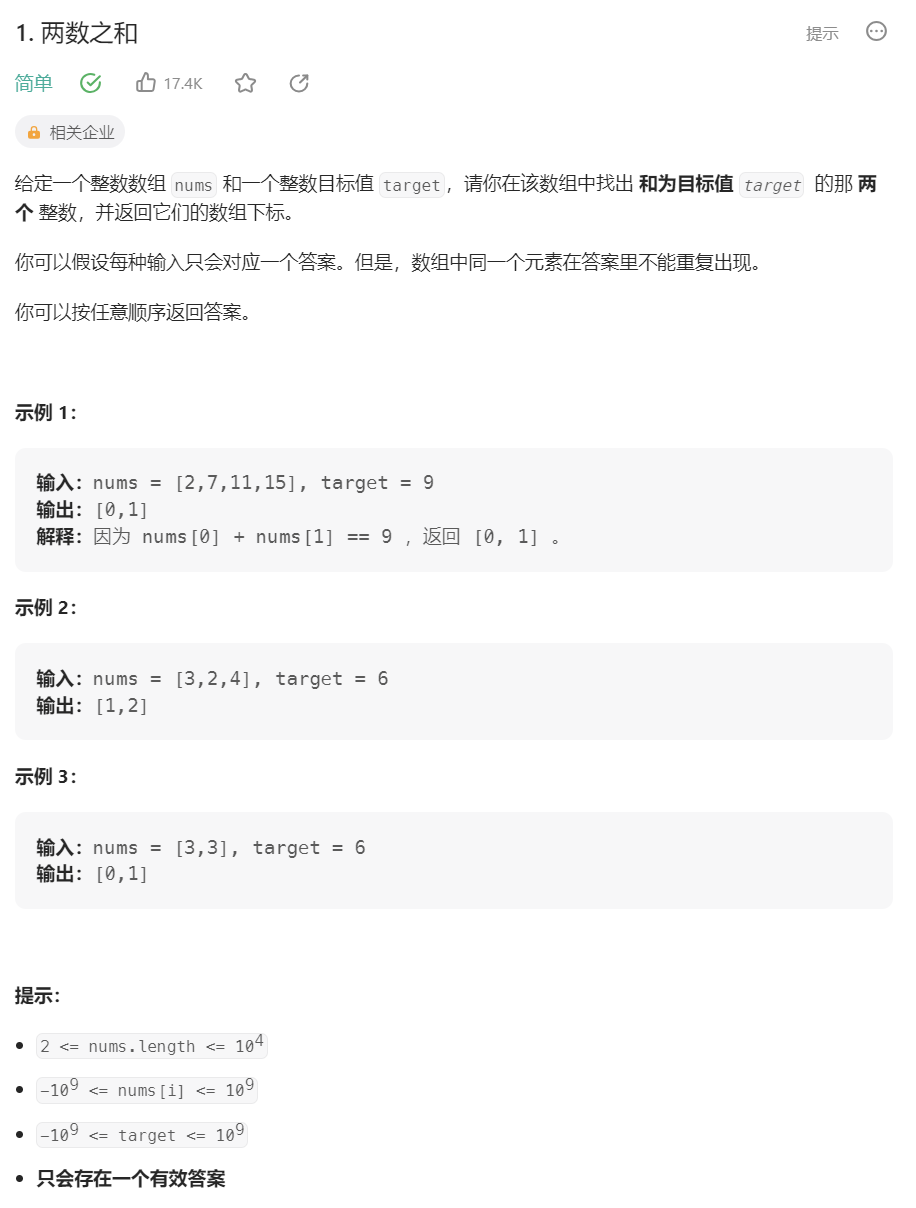
class Solution {public int [] twoSum(int [] nums, int target) {int n = nums.length;new HashMap <>();int [] res = new int [2 ];for (int i = 0 ; i < n; ++i) {if (map.containsKey(target - nums[i])) {0 ] = i;1 ] = map.get(target - nums[i]);return res;
方法一:DP
1
2
3
4
5
6
7
8
9
10
11
12
13
14
15
16
17
18
19
20
21
22
23
24
25
26
27
28
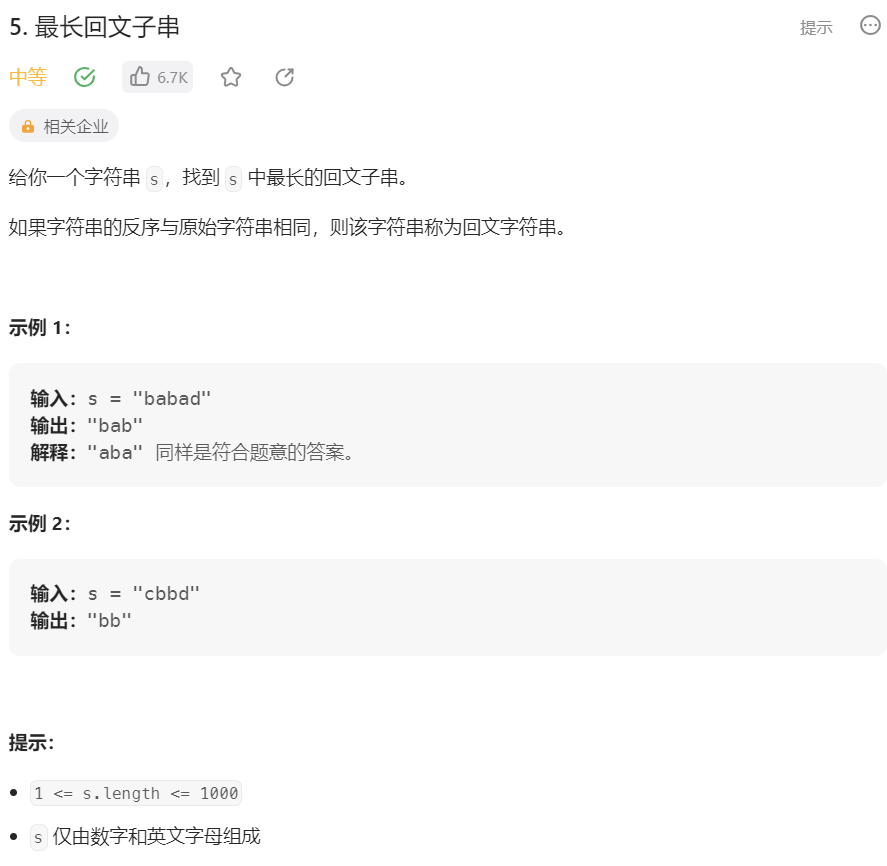
class Solution {public String longestPalindrome (String s) {int n = s.length(), max = 0 ;int [] maxIndex = new int [2 ];int [][] dp = new int [n][n];for (int i = 0 ; i < n; ++i) {for (int j = i; j >= 0 ; --j) {if (i - j + 1 == 1 )1 ;else if (i - j + 1 == 2 )2 : 0 ;else if (i - j + 1 == 3 )3 : 0 ;else {if (s.charAt(i) != s.charAt(j))0 ;else 1 ][j + 1 ] > 0 ? dp[i - 1 ][j + 1 ] + 2 : 0 ;if (dp[i][j] > max) {new int []{j, i};return s.substring(maxIndex[0 ], maxIndex[1 ] + 1 );